If you spent any time on cooking-related social media between 2021 and 2024, you saw HexClad. The hexagonal pattern on the cooking surface is visually distinct enough that once you know it you recognize it immediately — in professional kitchen videos, in celebrity chef content, in Gordon Ramsay’s endorsement deal that generated what felt like an inexhaustible stream of sponsored content.
The response to all of this was divided in a way that’s actually interesting. Some people became devoted fans. Others became skeptics who found the whole thing deeply suspicious. Both reactions were understandable. The truth about HexClad sits somewhere between them.
What HexClad actually is
The company was founded in Los Angeles in 2016 by Daniel Winer and Cole Mecray. The core product idea was a hybrid pan — a cooking surface that combined the nonstick properties of a coated pan with the durability and searing capability of stainless steel.
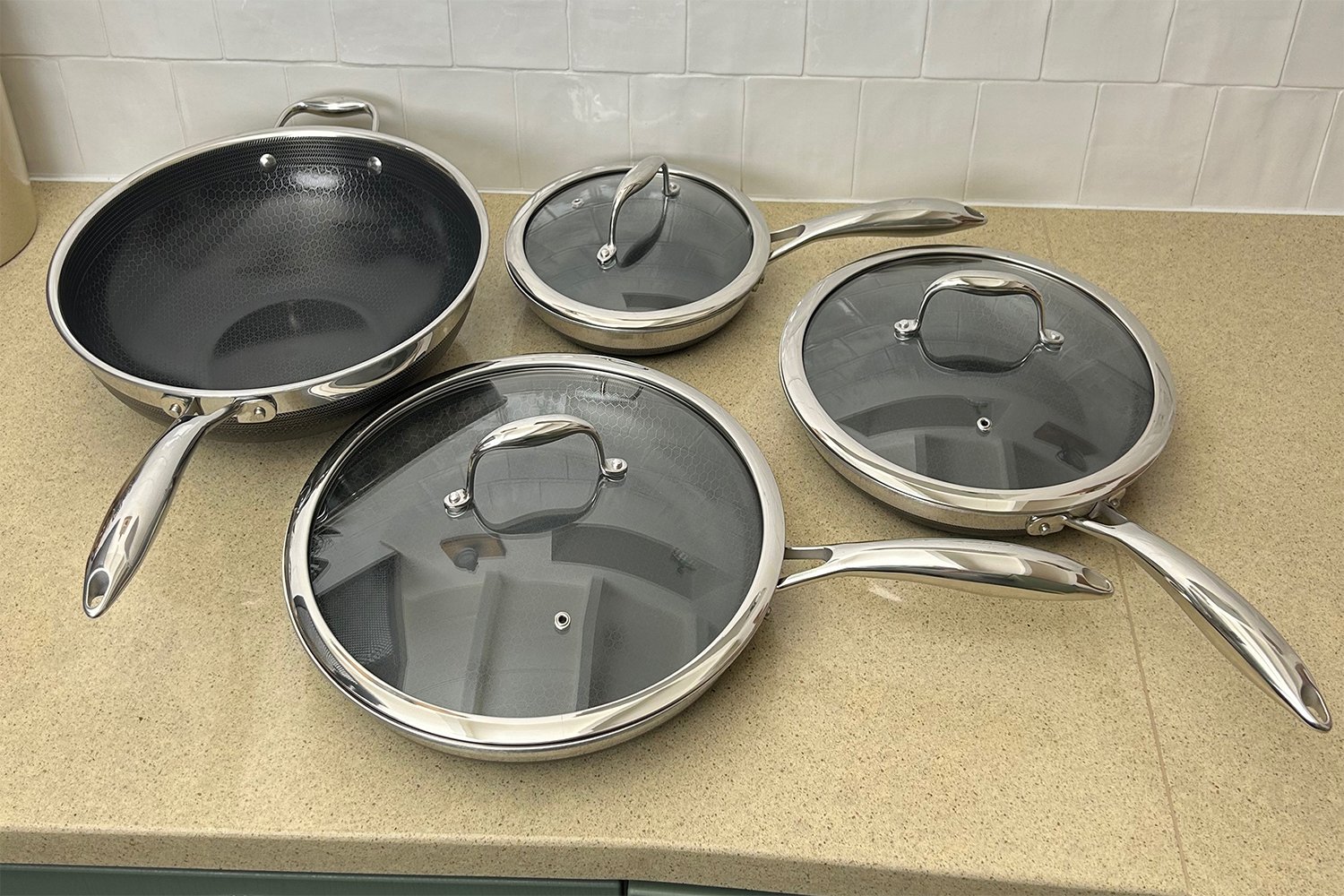
The hexagonal laser-etched pattern is how they achieve this. The peaks of the pattern are stainless steel, raised slightly above the cooking surface. The valleys between them are PTFE-coated. When you cook on a HexClad surface, food makes contact with both materials simultaneously.
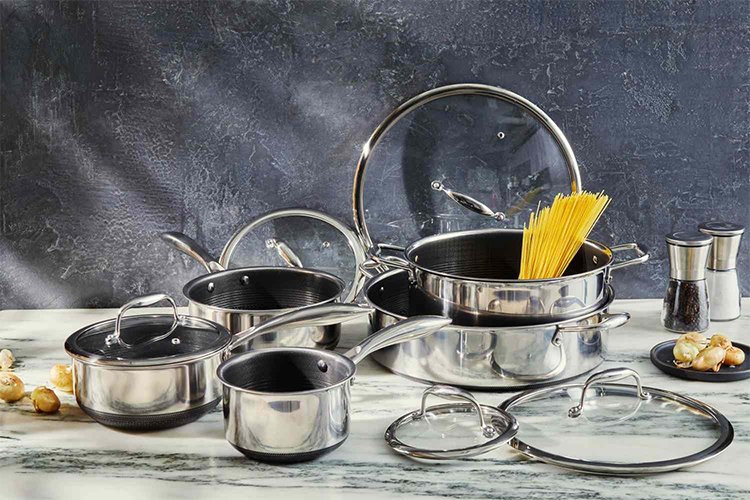
The claimed benefits are real in principle. The stainless steel peaks allow for browning and searing — food makes contact with metal that can get truly hot and develop a crust. The coated valleys prevent sticking and make cleanup easier. Theoretically, you get the best of both materials.
Whether that theory holds up in daily practice is where opinions diverge.
The Gordon Ramsay question
HexClad announced a partnership with Gordon Ramsay in 2021, and it changed the brand’s trajectory immediately. Ramsay is the most recognizable professional chef in the world to mainstream consumers, and his endorsement carried significant weight.
What’s worth noting: Ramsay’s involvement reportedly goes beyond a standard endorsement deal. He has been described as a partner in the business and has been involved in product development. Whether that translates into the pans being meaningfully better because of his input is hard to verify. But it does mean the relationship is more substantive than a celebrity putting their name on something for a check.
The marketing that came with the partnership was aggressive — unavoidably so. This generated a reflexive skepticism in some corners of the internet that probably wasn’t entirely fair to the product itself.
Performance in honest terms
Where HexClad performs well: the stainless peaks mean these pans can achieve a genuine sear on meat that pure nonstick pans can’t. You get the Maillard reaction, real crust formation, the kind of browning that makes a steak worth eating. That’s meaningful and it’s not something every pan on this list can claim.
The PTFE valleys mean eggs still slide, cleanup is manageable, and you can cook delicate proteins without the anxiety that comes with a pure stainless surface. For someone who wants one pan that handles both eggs in the morning and searing meat in the evening, the logic is genuinely appealing.
Where it gets more complicated: the nonstick performance, especially when the pan is new, is not as seamlessly easy as a pure nonstick surface. The raised stainless peaks create a slightly textured cooking experience that takes some adjustment. Eggs cooked in a brand-new HexClad will release cleanly, but they won’t slide around with the frictionless ease you get from a flat ceramic or PTFE surface.
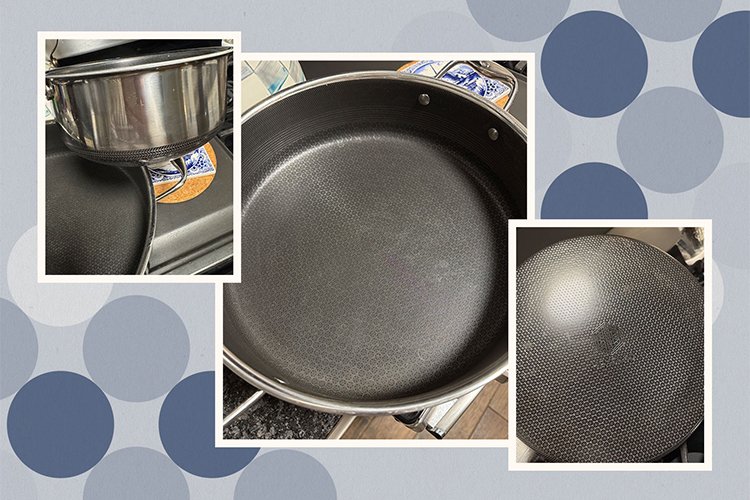
The searing capability is also somewhat dependent on technique. Using the stainless peaks properly means cooking at higher heat than you’d use for a pure nonstick pan. There’s a bit of a middle zone where the hybrid surface isn’t quite doing either job optimally. Once you figure out how to cook with it — and most people do — this becomes less of an issue.
Build quality and durability
HexClad pans are heavy. The seven-ply construction — layers of stainless and aluminum bonded together — adds up. Some people find the weight reassuring, a sign of solid construction. Others find a full HexClad skillet genuinely fatiguing to cook with over a long session.
The surface holds up better than standard PTFE over time. The stainless peaks protect the coated valleys from direct abrasion, which means the hybrid surface degrades more slowly than a conventional nonstick coating. HexClad markets their pans as compatible with metal utensils — the stainless peaks can handle it, though being careful around the coated valleys is still sensible.
Oven safe to 500°F. Induction compatible.
The price and the value question
HexClad is expensive. Individual pans run from $130 to $200 depending on size. Sets climb well above $500. For that money you could buy excellent pure stainless cookware or excellent pure nonstick cookware — both of which would outperform HexClad at their respective jobs.
The value proposition is specifically for people who want one pan that does both reasonably well. If that trade-off makes sense for how you cook, the price becomes more defensible. If you’re happy to have two different pans for two different jobs, the hybrid premium is harder to justify.
What the skeptics get right and wrong
The skeptics who say HexClad is primarily a marketing machine have a point. The celebrity deal, the aggressive paid promotion, the premium pricing — these are real and they did generate a justified eye-roll from people who prefer substance to spectacle.
The skeptics who conclude the pans are therefore bad are making a different mistake. The product is genuinely well made. The hybrid concept has real logic behind it. People who cook with HexClad regularly and have figured out its particular personality tend to be genuinely happy with it.
It’s not the revolution the marketing suggests. It’s a well-constructed pan with a specific trade-off profile that suits some cooks well and others less so. That’s actually fine.