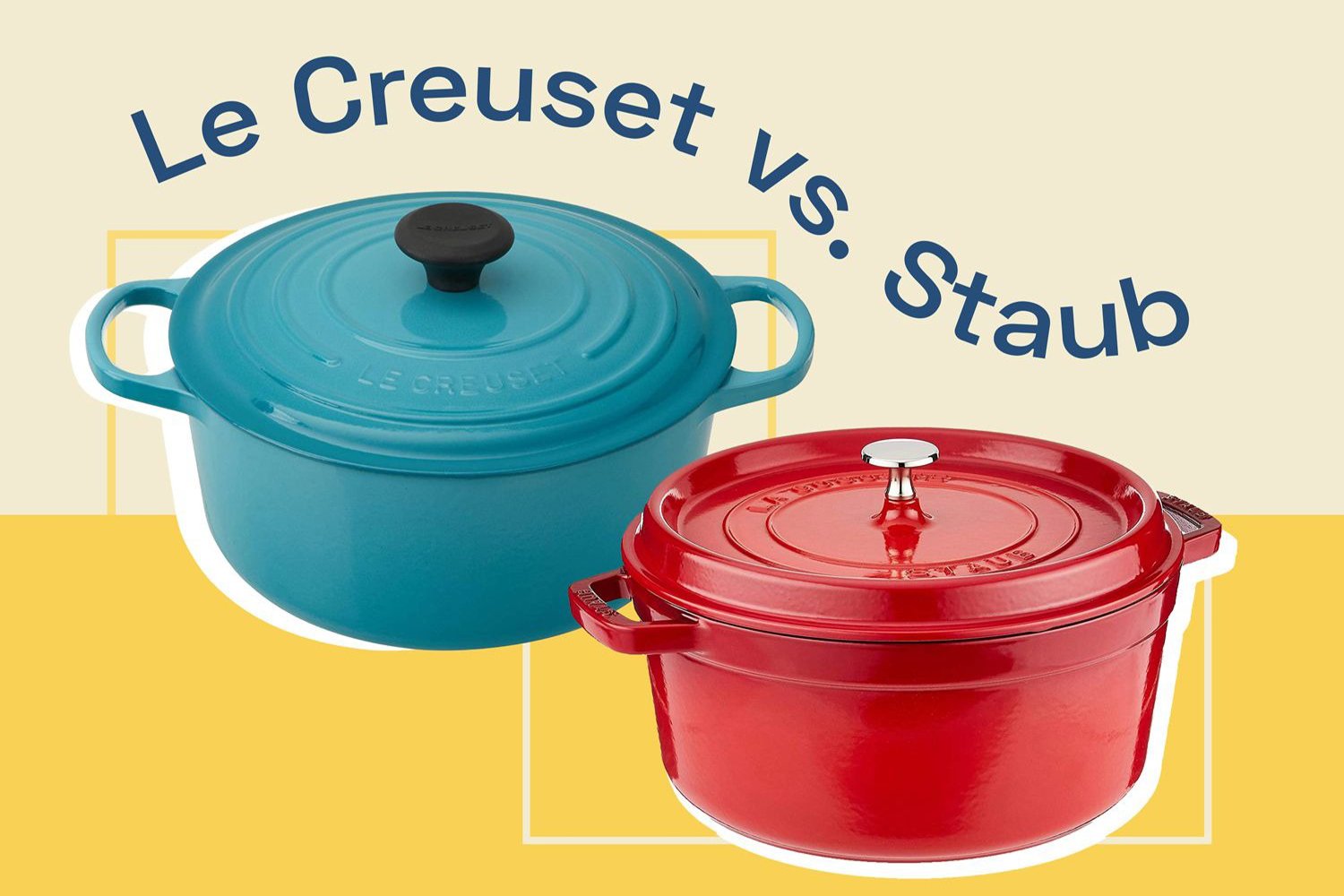
The cast iron Dutch oven conversation almost always starts with Le Creuset. Which is fair — Le Creuset built the category in the American market and has been in continuous production since 1925. But somewhere in that conversation, often from someone who owns both, a different name comes up.
Staub.
The brand is quieter than Le Creuset. Less colorful, in every sense. Smaller retail presence, lower marketing spend, and a design philosophy that leans toward darkness rather than the vivid oranges and blues Le Creuset is famous for. Yet among people who cook seriously and have used both, Staub has an unusually devoted following.
Understanding why requires getting into some details about how cast iron cookware actually behaves.
Francis Staub and Alsace
Francis Staub founded the company in Turckheim, in the Alsace region of northeastern France, in 1974. Alsace has a long tradition of ironwork — it sits on the border with Germany and the industrial heritage of both countries runs through the region. Staub grew up around cast iron foundry work and had opinions about how enameled cast iron cookware should be made.
The company’s early focus was on professional restaurant supply rather than the consumer market. Staub’s pieces found their way into serious French restaurant kitchens — not as a marketing strategy but because working chefs genuinely used them. The consumer business came later and was largely built on word of mouth from people who had encountered Staub in professional contexts.
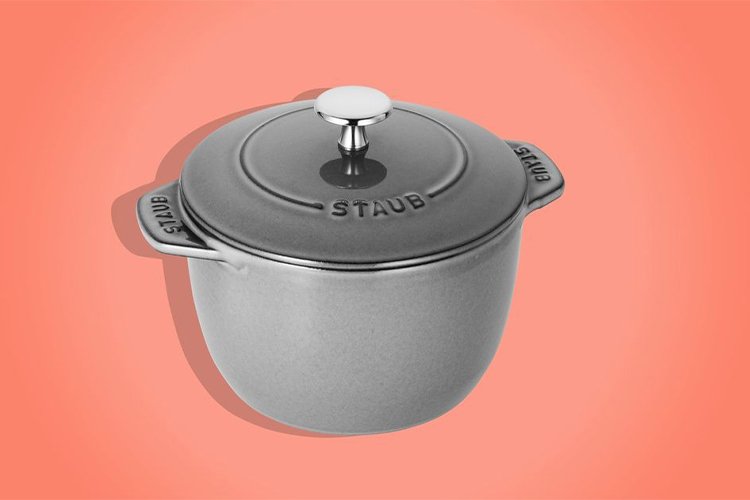
The company was acquired by the SEB Group in 2008 — the same French conglomerate that owns Le Creuset, which is an interesting footnote. The two brands have remained separate with distinct identities.
The lid difference
This is the detail that comes up most often in comparisons between Staub and Le Creuset, and it’s real enough to warrant explaining properly.
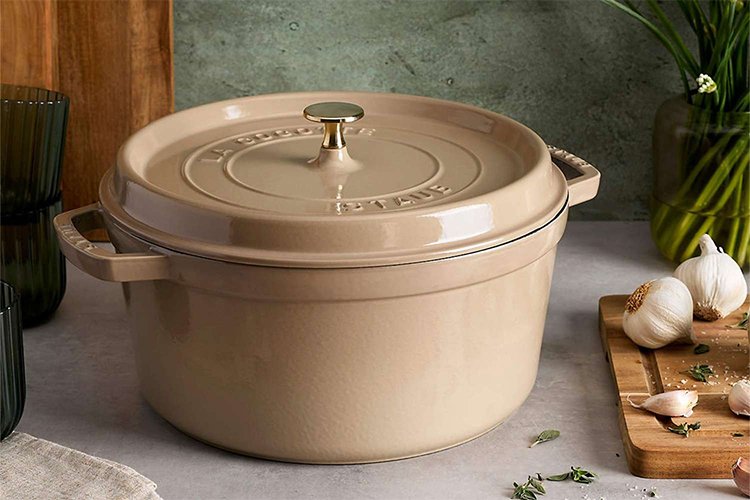
Staub’s Dutch oven lids have small brass or nickel spikes on the underside — the company calls them “self-basting spikes.” As moisture evaporates during cooking, it rises, condenses on the underside of the lid, collects on the spikes, and drips back down onto the food in a relatively even pattern across the surface.
Le Creuset’s lids are smooth on the inside. Condensation forms and runs to the rim rather than dripping back evenly.
The practical difference shows up most clearly in long braises and slow-cooked dishes. Staub’s self-basting action keeps the surface of meat or vegetables moister throughout the cooking process. The result can be noticeably different in dishes where moisture retention and self-basting matter — short ribs, whole chicken, braised lamb. In dishes where it matters less — soups, stews with plenty of liquid — the difference is minimal.
This isn’t a flaw in Le Creuset. It’s a different design choice that reflects different priorities. Staub decided this feature was important enough to build into every lid. Le Creuset made other choices.
Black interior enamel
Staub uses a matte black enamel on the interior cooking surface rather than Le Creuset’s cream or lighter-colored enamel. This is another real functional difference that gets less attention than it deserves.
The matte black surface develops a natural patina over time as you cook with it — similar to seasoning on raw cast iron, but milder. This gradually improves the surface’s nonstick properties and builds a kind of flavor history in the pan.
It also shows staining far less than a light-colored enamel. Le Creuset’s cream interiors develop discoloration over time that can be difficult to fully remove. For some people this is fine — a patina, part of the character. For others it’s a perpetual cleaning frustration. Staub’s black interior sidesteps the issue entirely.
The trade-off is that you can’t see what’s happening on a Staub cooking surface as easily as on Le Creuset’s lighter interior. For beginners building fond or monitoring browning, the visibility difference is real.
The exterior aesthetic
Le Creuset built its brand on vivid, saturated colors. Staub’s palette is darker and more muted — deep blues, dark greens, graphite grey, cherry red that’s richer and less bright than Le Creuset’s version. Grenadine rather than Flame.
Neither is better. They appeal to different aesthetics. Staub’s pieces look more like serious professional equipment. Le Creuset’s look more like they belong in a design-forward home kitchen. Both are correct assessments.
The base of Staub pieces is textured rather than smooth, which provides some additional grip when handling. The lids fit more tightly than Le Creuset’s — not airtight, but snugger, which contributes to the moisture retention the self-basting design is built around.
What Staub makes beyond Dutch ovens
The cocotte — French for Dutch oven — is the brand’s flagship, but Staub’s range extends considerably beyond it.
The braisers are worth specific mention. Wider and shallower than a Dutch oven, with a domed lid that works the same self-basting way, a Staub braiser is arguably the most versatile single piece of cast iron cookware you can own. It sears, it braises, it goes from stovetop to oven. A whole chicken fits in it. A large slab of short ribs fits in it. It’s heavy but not as heavy as a comparable Dutch oven.
Staub also makes cast iron skillets, grill pans, woks, and a line of ceramic bakeware. The cast iron skillets use the same black matte interior enamel as the Dutch ovens and develop the same patina over time.
Price relative to Le Creuset
Staub tends to run slightly lower than Le Creuset at comparable sizes. The gap varies and changes with sales and collections, but Staub is generally considered the better value of the two for people who are purely evaluating functional cooking performance.
Le Creuset commands a premium partly for brand recognition and partly for the color range, which is genuinely broader and more frequently updated than Staub’s. If color selection matters to you — if you’re matching a specific kitchen palette or want access to seasonal limited editions — Le Creuset’s range is unmatched.
If you’re buying primarily to cook and are less concerned with aesthetics, the price-to-performance comparison tends to favor Staub.
Who should actually buy Staub
People who braise. That’s the simplest answer. If you make short ribs, whole chickens, lamb shanks, slow-cooked beans — if these are regular parts of your cooking life — Staub’s self-basting lid design will make a perceptible difference and you’ll understand immediately why the devoted fans are so devoted.
People who find Le Creuset’s light interior a maintenance frustration. The black Staub interior ages beautifully and requires no special attention to keep looking good.
People who cook seriously and want professional equipment that doesn’t call attention to itself.