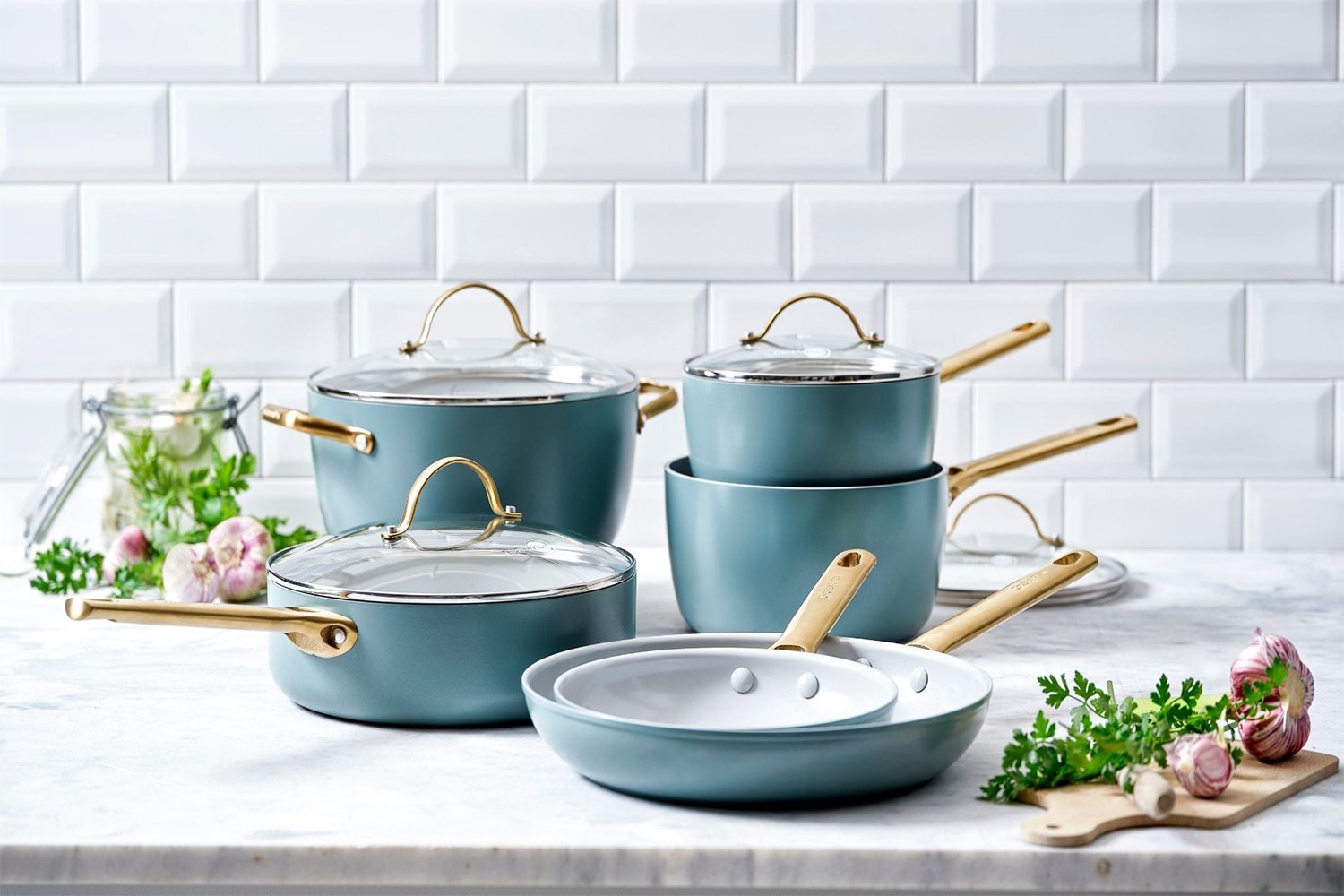

Ceramic nonstick cookware exists as a mainstream product category today largely because of one company that decided, in 2007, that the industry had a problem worth solving. GreenPan didn’t create ceramic coatings. But they figured out how to apply them to cookware in a way that actually worked, and they built a brand around the idea that what your pan is made of is as important as how it performs.
That was a genuinely different conversation for the cookware market to be having.
The Antwerp moment
Jan Helskens and Wim De Veirman founded GreenPan in Belgium in 2007. The timing wasn’t random — that year, PFOA, a chemical used in the manufacturing of traditional PTFE nonstick coatings, was increasingly under regulatory scrutiny in the US and Europe. The EPA had reached agreements with major manufacturers to phase it out. Research linking PFOA to health concerns was gaining mainstream attention.
Most cookware companies responded by reformulating their PTFE coatings to eliminate PFOA while keeping the PTFE itself. They solved the immediate regulatory problem and moved on.
GreenPan took a different position. Their argument was that PTFE itself — the fluoropolymer base of traditional nonstick — was part of a chemical family that warranted more skepticism than the industry was giving it. They developed a ceramic-based coating called Thermolon that contained no PTFE, no PFOA, and no other PFAS chemicals.
This was a harder thing to bring to market than simply reformulating an existing product. Ceramic coatings behaved differently in the pan, required different application methods, and had different performance characteristics than PTFE. Getting it right took real development work.
What Thermolon actually is
Thermolon is a ceramic coating derived primarily from sand. The core component is silicon dioxide — the same stuff glass is made from — which is applied as a coating to the metal base of the pan and cured at high temperatures.
The cooking surface it creates is non-reactive, meaning it won’t leach chemicals into food even at high temperatures. GreenPan publishes the results of third-party testing that shows no chemical emission from their coating up to temperatures well above what home cooking ever requires. The coating is also scratch-resistant to a reasonable degree and provides genuine nonstick performance when the pan is new.
The honest comparison to PTFE: ceramic nonstick is cleaner in terms of chemical composition and generally considered safer if the coating ever degrades. PTFE is more durable and will maintain its nonstick properties for longer with normal use. These are real trade-offs, not marketing talking points. GreenPan’s answer is that the chemical cleanliness matters enough to accept the shorter coating lifespan.
The product range
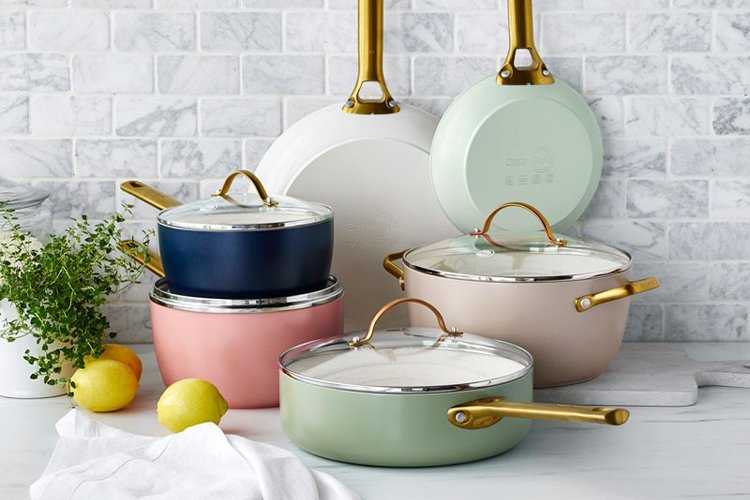
GreenPan makes a lot of different collections at different price points, which can make navigating their lineup a bit confusing. The core distinction is between collections that use aluminum construction with Thermolon coating and those that use harder-anodized aluminum or stainless steel exteriors.
The Valencia Pro collection is where most serious buyers land. Hard-anodized aluminum exterior, multiple layers of Thermolon coating, metal utensil safe to a reasonable degree. These are GreenPan’s workhorses — better coating durability than the entry-level lines and improved heat distribution from the harder exterior.
The Venice Pro sits above Valencia and uses a different application method for the coating that GreenPan claims improves durability further. It’s also oven safe to higher temperatures. For people who do a lot of stovetop-to-oven cooking, this is worth looking at.
At the premium end, GreenPan’s Infinite8 and similar collections use different material combinations and reinforced coating formulations. The price reflects real manufacturing differences, not just positioning.
Cooking with ceramic nonstick day to day
Out of the box, a new GreenPan is a pleasure to cook with. Food releases cleanly, cleanup is easy, and the pan heats up quickly without any of the technique requirements of stainless steel. Eggs, fish, pancakes — anything that tends to stick in a stainless pan is a non-issue.
Low to medium heat is the right zone. This isn’t a limitation exclusive to GreenPan — it’s true of ceramic nonstick across the board. The coating degrades faster with repeated high-heat use. Not immediately, not dramatically, but over time it matters.
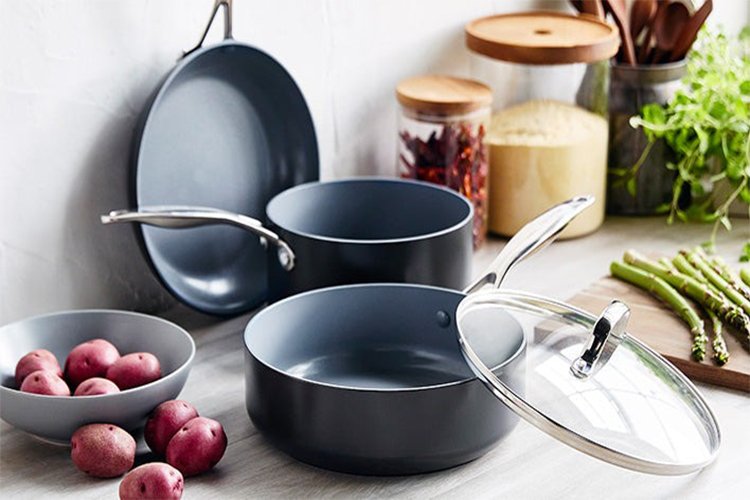
No metal utensils in practice, even on lines that claim to be metal-utensil-safe. Technically a smooth metal spatula used carefully won’t immediately destroy the surface. But the cumulative effect of metal contact speeds up coating wear. Silicone and wood are the right call.
Handwashing extends life significantly. Dishwasher detergents are harsh, and running a ceramic-coated pan through a dishwasher repeatedly accelerates degradation. It’s an extra two minutes of washing. Worth it.
The coating eventually fades. For most people using GreenPan pans daily with reasonable care, the noticeable performance decline happens somewhere between eighteen months and three years. This is the honest reality of ceramic nonstick as a category. GreenPan isn’t worse than competitors on this — they’re fairly typical. But buyers who expect a nonstick surface that performs identically at year three as it did on day one will be disappointed regardless of brand.
How GreenPan changed the market
Before GreenPan made ceramic nonstick mainstream, the choice in nonstick cookware was essentially PTFE or nothing. There were ceramic-coated pans in the market but they were mostly low-quality, short-lived products that gave the category a bad reputation.
GreenPan put real development resources into the coating technology, built collections at multiple price points, and marketed the health angle consistently. The result was a segment that didn’t really exist before them growing into a significant portion of the overall cookware market.
Caraway, Our Place, and a long list of other brands building ceramic nonstick cookware today are all operating in a space that GreenPan opened up. That’s not a small thing.