
There’s a particular kind of frustration that comes with buying cookware through a department store. You’re standing in front of a wall of pans, all of them expensive, none of them with any real explanation of why. The salesperson doesn’t cook. The packaging says things like “professional grade” without explaining what that means. You pick something, spend more than you wanted to, and go home hoping for the best.
Made In was built specifically for people who were tired of that experience.
Two guys who actually knew where cookware came from
Chip Malt and Jake Kalick started the company in 2017. Their families had backgrounds in restaurant supply — real commercial kitchen supply, not the consumer retail version. That meant they already knew something most cookware startup founders don’t: who actually makes the equipment that professional kitchens trust, and how far the retail price is from what it costs to manufacture it.
The gap, it turns out, is substantial. A pan made in the same Italian factory as something you’d find in a Michelin-starred restaurant kitchen can pass through four or five different hands before it reaches a consumer — each one adding margin. By the time it hits a department store shelf, you’re paying for the pan plus everyone who touched it along the way.
Made In’s solution was blunt: skip all of that. Sell directly. Keep the manufacturing quality, lose the markup chain.
What they actually make
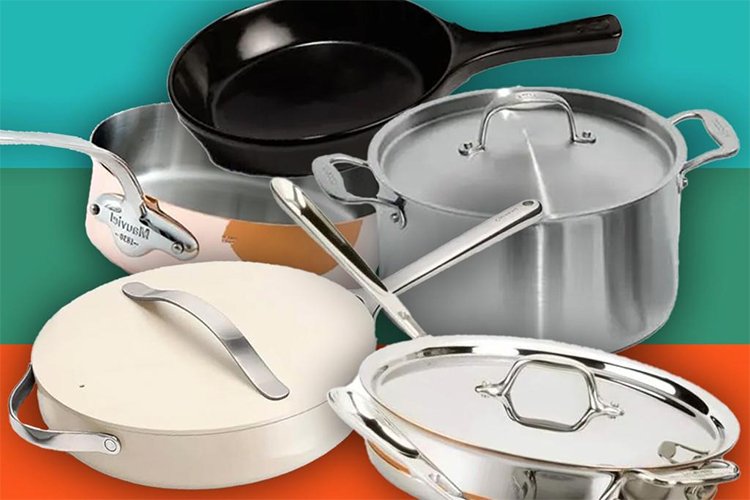
The range is wider than most people expect. Stainless steel, carbon steel, nonstick, cast iron, and knives. Each category handled differently, but all of them coming from the same underlying philosophy — work with factories that know what they’re doing, be transparent about where things are made, and price honestly.
Stainless steel is the heart of the brand. Five-ply construction — five alternating layers of stainless and aluminum — which is what serious professional cookware is built from. It’s not a marketing term Made In invented. It’s a construction method that has existed in professional kitchens for decades because it works. Heat spreads evenly, the surface holds up, the pans last. These are made in Italy.
The nonstick line is PTFE. Made In is upfront about this and doesn’t apologize for it. Their argument is straightforward — properly applied, PFOA-free PTFE is the most durable nonstick surface you can buy. They’re not wrong. The coating is applied in Italy by a manufacturer that also supplies commercial operations. It will outlast ceramic nonstick by a meaningful margin if you treat it reasonably.
Carbon steel is where a lot of Made In’s most devoted customers end up. It’s a material that takes some time to understand — lighter than cast iron, faster to respond to heat changes, develops a natural nonstick surface as you cook with it over time. The carbon steel comes from France. People who get past the initial learning curve tend to reach for these pans constantly.
The knives came out of a collaboration with Thiers Issard, a French manufacturer that has been making blades since 1870. Good knives. Balanced, hold an edge, priced fairly given what they are.
The chef relationships are real, not just marketing
A lot of brands slap a chef’s name on packaging and call it a partnership. Made In’s chef relationships are different in a practical sense — they actually use the feedback.
When working chefs cook with your pans in real service conditions, they notice things. Handle too short. Coating not holding up the way it should under high-heat commercial use. The weight distribution is off. Made In has a track record of taking that input and revising products. It shows in how the line has evolved since 2017.
Cookware that gets stress-tested in professional kitchens and survives is cookware you can trust at home. That’s the logic, and it holds up.
How these pans actually behave
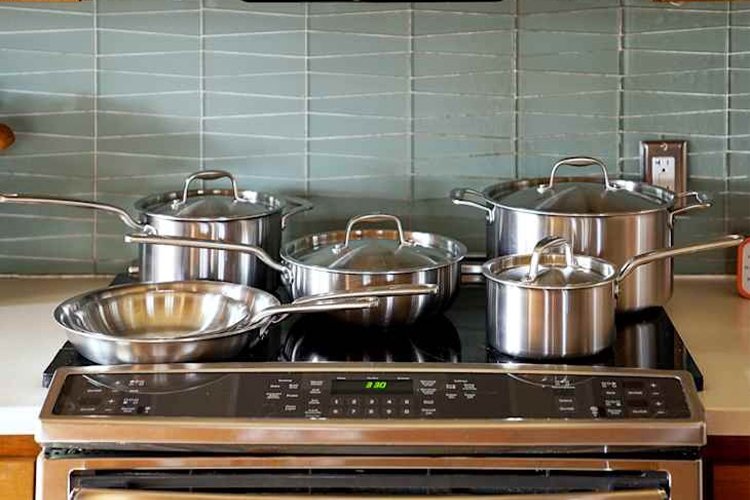
The stainless steel is genuinely excellent once you know what you’re doing. Even heat across the whole surface — not just the center — which matters when you’re trying to sear something properly without it cooking in a ring around a hot middle. Oven safe to high temperatures. Handles stay cool on the stovetop.
The thing nobody tells you clearly enough upfront: stainless steel sticks if you don’t preheat it properly. It’s not a defect. It’s just how stainless works. Drop a bit of water in — if it beads up and moves around rather than immediately evaporating, the pan is ready. Add your fat, then your food. Once this becomes second nature it’s a non-issue, but the first few times it can catch people off guard.
Nonstick needs no technique at all. Eggs, fish, anything delicate — it just works. The PTFE coating applied in multiple layers means it holds up longer than single-coat alternatives. Most people who care for these pans reasonably get several years of solid performance from them.
Carbon steel is its own journey. The initial seasoning takes some patience. The first handful of uses can be uneven. But somewhere around the third or fourth month of regular use, something shifts — the pan develops a character and a natural release that cast iron and stainless just don’t have. People who get there tend to become genuinely attached to their carbon steel pans in a way that’s a bit hard to explain until you’ve experienced it.
What you actually pay
Less than you’d expect for this quality level, which is the whole point.
Made In’s five-ply stainless sits well below what comparable construction costs through traditional retail. The materials are real, the manufacturing is real, and the price reflects the fact that you’re not subsidizing a retail chain. It’s not cheap — this is still quality cookware — but the value comparison against brands sold through department stores is stark once you start looking at it directly.
They run sales and bundle deals regularly. If you’re building a full set rather than buying a single piece, it’s worth checking what’s currently on offer before you buy individual items.
Who gets the most out of Made In
People who want to buy good cookware once and actually keep it. The stainless steel and carbon steel pieces are built for the long term in a practical, not theoretical way. These are pans you can cook with daily for ten years and they’ll still be performing.
Also people who are willing to learn a little. Not a lot — a few hours of reading and maybe a weekend of cooking and the technique for stainless becomes automatic. Carbon steel takes a bit longer. But the payoff is a set of pans that respond to you in a way that convenience-focused cookware never really does.
Pure convenience with zero learning curve? The nonstick line handles that. It performs without any technique requirements. Just don’t expect it to last as long as the stainless or carbon.
The short version
Made In took a simple idea and executed it well. Good manufacturers, direct sales, honest prices. The cookware is solid in the way that things are solid when they’re made by people who actually know how to make them, rather than by whoever came in with the lowest bid.
In a market full of brands that sound impressive and disappoint in the kitchen, that’s a harder thing to find than it should be.