Caraway Home — The Brand That Changed How We Think About Nonstick Cookware
Nonstick pans used to be a throwaway category. You bought one, used it for a year or two, noticed the coating starting to flake, threw it out, and bought another one. Nobody asked too many questions about what that coating actually was or where it went when it degraded. It was just how things worked.
Caraway came along in 2019 and made people ask those questions. That turned out to be a very good business decision — but more importantly, it was the right conversation to start.
A brand born out of a bad evening in the kitchen
Jordan Nathan, Caraway’s founder, has talked openly about what sparked the idea. He was cooking at home, the pan got too hot, and he started feeling off — headache, slight nausea. He went looking for answers and ended up deep in research about PTFE, PFOA, and a broader family of chemicals called PFAS — sometimes called “forever chemicals” because they accumulate in the body and the environment rather than breaking down.
What he found wasn’t alarming in a headline-grabbing way, but it was unsettling enough. PFOA had been phased out of US manufacturing by 2013 under EPA pressure, but the broader PFAS conversation was still relatively niche. Most home cooks had no idea what was coating the inside of their pans.
Nathan figured there was a real market for cookware that addressed this honestly — and that looked beautiful while doing it. Both parts of that turned out to matter enormously.
What Caraway actually sells
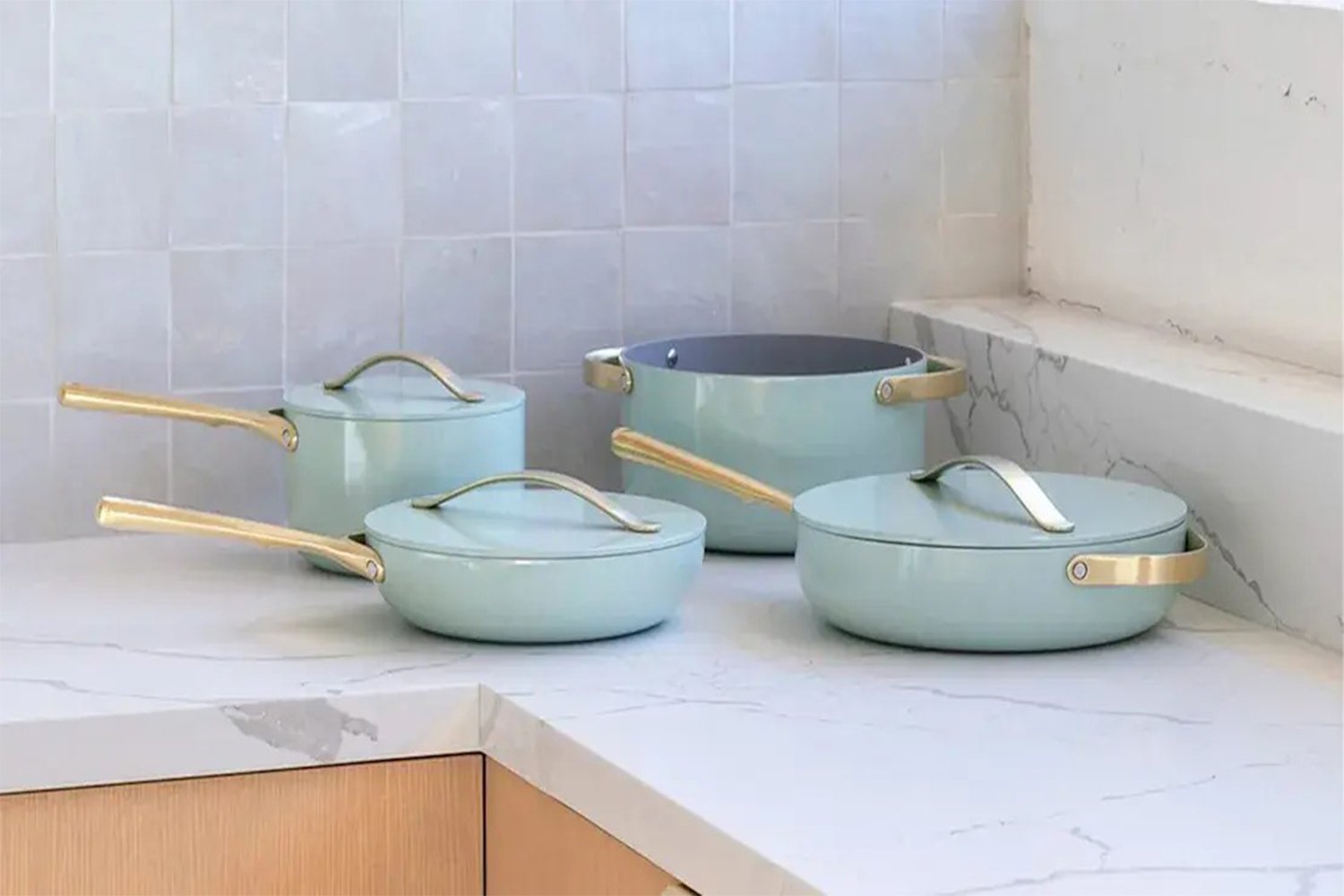
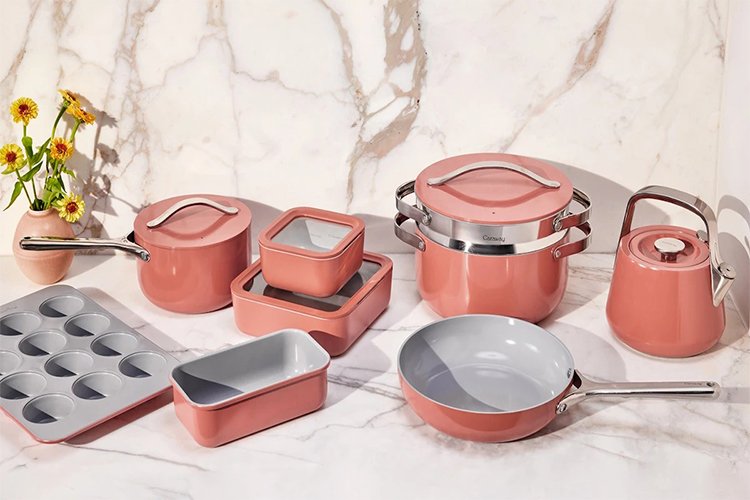
The original Caraway lineup was tight: a fry pan, sauté pan, sauce pan, and Dutch oven. Four pieces. That’s it. No massive sets with pots you’ll never use, no bundling mediocre pieces with good ones. Just four well-considered pieces of cookware.
The construction is aluminum core with a ceramic nonstick coating. No PTFE, no PFOA, no lead, no cadmium. The ceramic surface is what gives Caraway its clean cooking reputation — food releases easily, cleanup is fast, and you don’t have to wonder what’s in the coating.
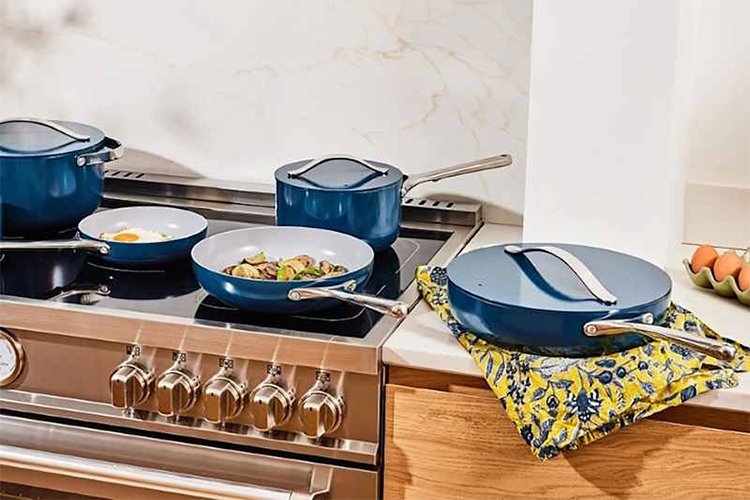
Colors were a deliberate part of the launch strategy from the beginning. Caraway came out in shades like sage, cream, navy, and periwinkle — colors that looked genuinely beautiful sitting on a stove. That turned out to be more important than anyone expected. People started showing off their Caraway pans in a way nobody had ever shown off cookware before. The Instagram effect was real and significant.
Since then the brand has grown into bakeware, food storage, and kitchen tools, all following the same aesthetic logic. The bakeware uses the same ceramic coating philosophy. The food storage line is glass with airtight lids. Everything is designed to work together visually — which sounds like a small thing until you realize how much it contributes to the overall experience of owning Caraway products.
They also include a storage solution with the cookware sets — canvas lid holders and a magnetic pan rack — which is one of those details that seems minor until you’re actually living with it. The fact that someone thought about where you’d put these things after you bought them says something about how the whole brand is run.
Cooking with Caraway — the honest version
Fresh out of the box, Caraway pans perform beautifully. Eggs don’t stick. Fish comes up cleanly. Cleanup is genuinely a thirty-second job with a soft cloth and a bit of warm water. The aluminum core heats up quickly, and for everyday cooking — scrambled eggs, sautéed vegetables, pan sauces — the performance is excellent.
A few things are worth understanding before you buy.
Ceramic nonstick and high heat don’t get along. Caraway recommends low to medium heat, and they mean it. Crank the heat and you’ll degrade the coating faster than it needs to be degraded. For searing at high temperatures, a cast iron or stainless steel pan is going to serve you better. Caraway isn’t trying to be that pan.
Metal utensils will scratch the surface. Silicone or wood only.
The dishwasher will shorten the coating’s life. Hand washing is straightforward and quick — but if you’re someone who puts everything in the dishwasher without exception, that’s worth knowing upfront.
Longevity is the most honest criticism of ceramic nonstick as a category. With good care, most people get two to three solid years out of Caraway before noticing any real decline in performance. After that, the nonstick properties start fading. Caraway isn’t a once-in-a-lifetime purchase the way a cast iron skillet can be. It’s more like a well-made piece of clothing — it has a lifespan, and when it ends, you buy another one.
Whether that bothers you depends on how you think about cookware. A lot of Caraway customers are completely fine with it. Others find it frustrating. Worth knowing which camp you fall into before spending the money.
The pricing reality
The full four-piece set typically sits around $395, sometimes lower during sales. Individual pieces range from around $95 for the fry pan up to $145 or so for the Dutch oven.
That puts Caraway firmly in the mid-premium range. It’s a real investment — more than most nonstick options, considerably less than All-Clad or Le Creuset. Whether it’s worth it comes down to whether the non-toxic angle and the design matter to you personally.
For buyers who want the cleanest cooking surface they can get and care how their kitchen looks, Caraway is a genuinely strong choice. For buyers who are purely optimizing for performance and longevity and don’t care about aesthetics, there are better options at lower prices.
Who Caraway suits best
The Caraway customer tends to think about what goes into their food. They care about their kitchen looking nice. They’re not necessarily professional cooks — they cook real meals for themselves and their families and want it to be a pleasant experience rather than a chore. They’re comfortable spending a bit more for something they’ll actually enjoy using.
If that’s you, Caraway is worth it. If you’re cooking at high heat aggressively and regularly, or if you’re the kind of person who’ll forget to use the right utensil half the time, you’ll probably wear through a Caraway pan faster than the price justifies.
Why Caraway matters beyond just the pans
Something Caraway did that’s easy to underestimate: they changed what a whole category of buyers expected from cookware. Before Caraway, the idea that your pans should be beautiful, non-toxic, and thoughtfully designed wasn’t really part of the mainstream conversation. After Caraway, a wave of brands followed with similar products and similar messaging.
Some of those competitors are good. Some are not. But Caraway was first, they built a real community, and that tends to stick. The original still holds its ground.