Most people end up with a collection of cookware that happened to them rather than one they chose deliberately. A nonstick pan from a gift, a stainless skillet bought on sale, a cast iron pan inherited from someone. The collection works well enough but nothing feels quite optimized.
Understanding what each material actually does — and doesn’t do — makes the decision straightforward.
Stainless steel
What it’s good at: searing, browning, building fond for pan sauces, anything that benefits from high heat. Stainless steel can get genuinely hot without damage to the surface. Food proteins brown and release naturally when cooked correctly, leaving behind the caramelized bits that make pan sauces worth making.
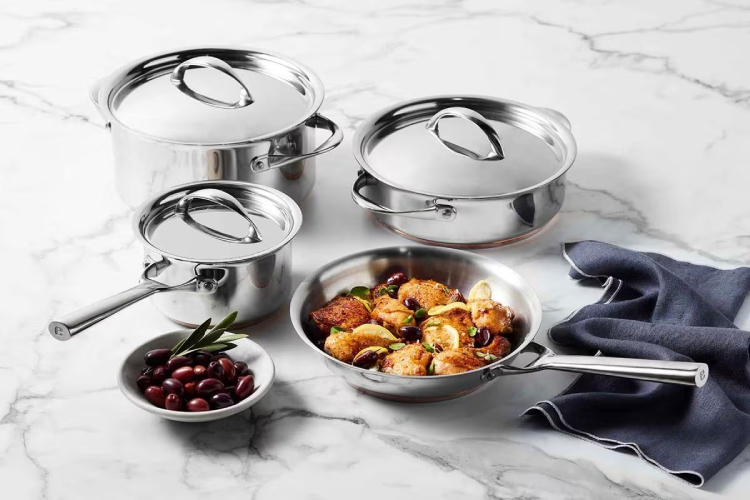
What it requires: technique. Stainless sticks if you don’t preheat it properly. The learning curve is real but short — once you know the water bead test and understand that protein releases when it’s ready rather than when you pull at it, stainless steel becomes intuitive.
What it lasts: indefinitely. No coating to degrade. A well-made stainless pan is a generational purchase.
Best for: Cooks who sear meat regularly, make pan sauces, want cookware that lasts without any coating lifespan concerns.
Nonstick
What it’s good at: eggs, fish, pancakes, anything delicate that would stick in stainless. Low-fat cooking where you don’t want to add much oil. Quick cleanup.
What it requires: gentle treatment. No high heat, no metal utensils, no dishwasher if you want the coating to last. These requirements are manageable but they’re real.
What it lasts: two to five years depending on construction quality and how well you follow the care guidelines. This is a consumable purchase — eventually the coating degrades and the pan needs replacing.
Best for: Everyday cooking where convenience matters, people who cook eggs most mornings, cooks who want zero-stress cleanup.
Cast iron
What it’s good at: heat retention. Once a cast iron pan is up to temperature it holds that temperature under load better than any other common cookware material. Excellent for searing at high heat, for cornbread, for anything where a stable cooking temperature matters. Also excellent for the oven — cast iron tolerates very high temperatures without any concern.
What it requires: raw cast iron needs seasoning and rust prevention maintenance. Enameled cast iron requires neither but costs significantly more.
What it lasts: multiple generations with basic care. Cast iron is genuinely the forever purchase that people claim it is.
Best for: Searing meat, baking in cast iron, slow stovetop cooking, anyone who cooks regularly and wants equipment that improves with use.
Ceramic
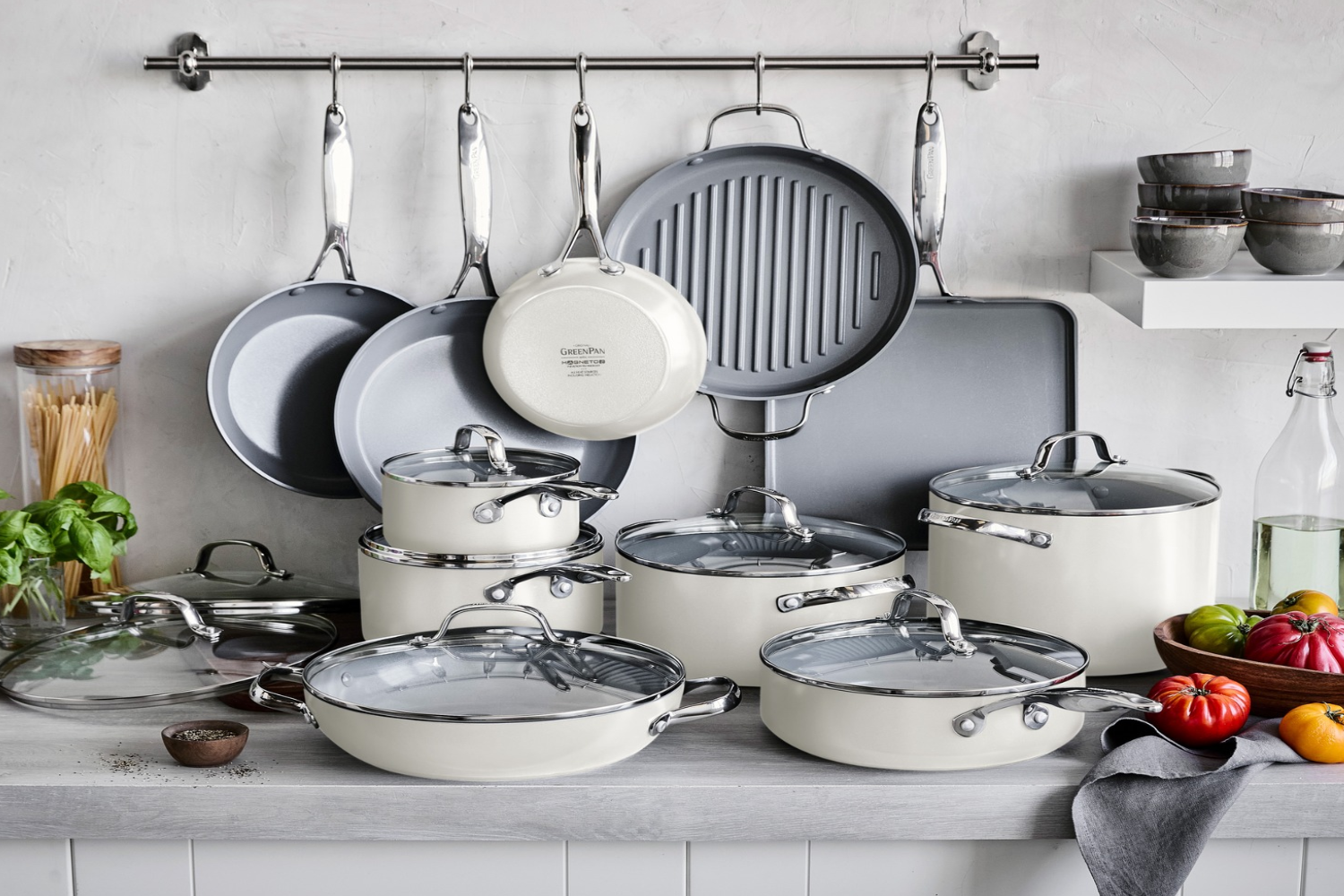
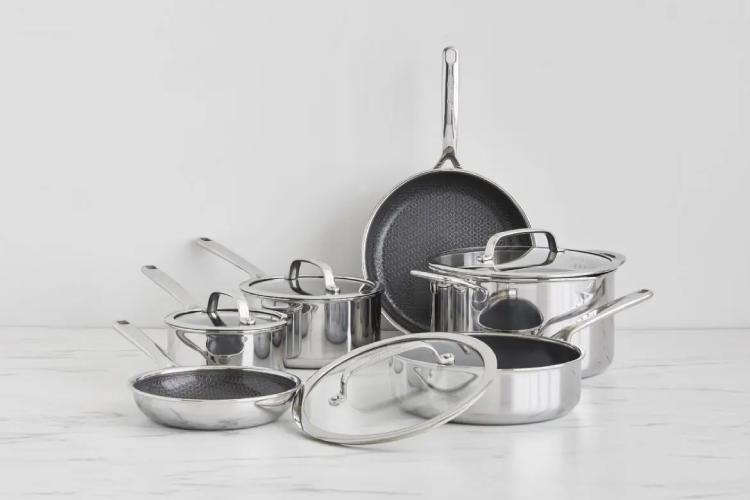
What it’s good at: same cooking tasks as nonstick — delicate proteins, eggs, anything that sticks in stainless — with a cleaner chemical profile. No PTFE, no PFAS. Performs well at low to medium heat.
What it requires: the same care as nonstick, and in some ways more. Ceramic coatings are more sensitive to high heat than PTFE and degrade faster under the same conditions.
What it lasts: shorter than PTFE nonstick in most cases. One to three years with proper care.
Best for: Cooks who specifically want to avoid PTFE for health or environmental reasons and are comfortable with a shorter coating lifespan.
Building a practical set
Most home cooks are well-served by three pieces that each do a different job.
A stainless skillet or sauté pan for searing and stovetop cooking. An All-Clad D3 or Made In five-ply handles this.
A nonstick or ceramic pan for eggs and delicate proteins. Anolon Advanced or GreenPan Valencia Pro depending on whether you prefer PTFE or ceramic.
A cast iron Dutch oven or a stainless stock pot for soups, braises, and anything requiring volume. Le Creuset or Staub for cast iron. All-Clad or Made In for stainless.
Three pieces. All three doing their specific job properly. More useful than a twelve-piece set of one material.