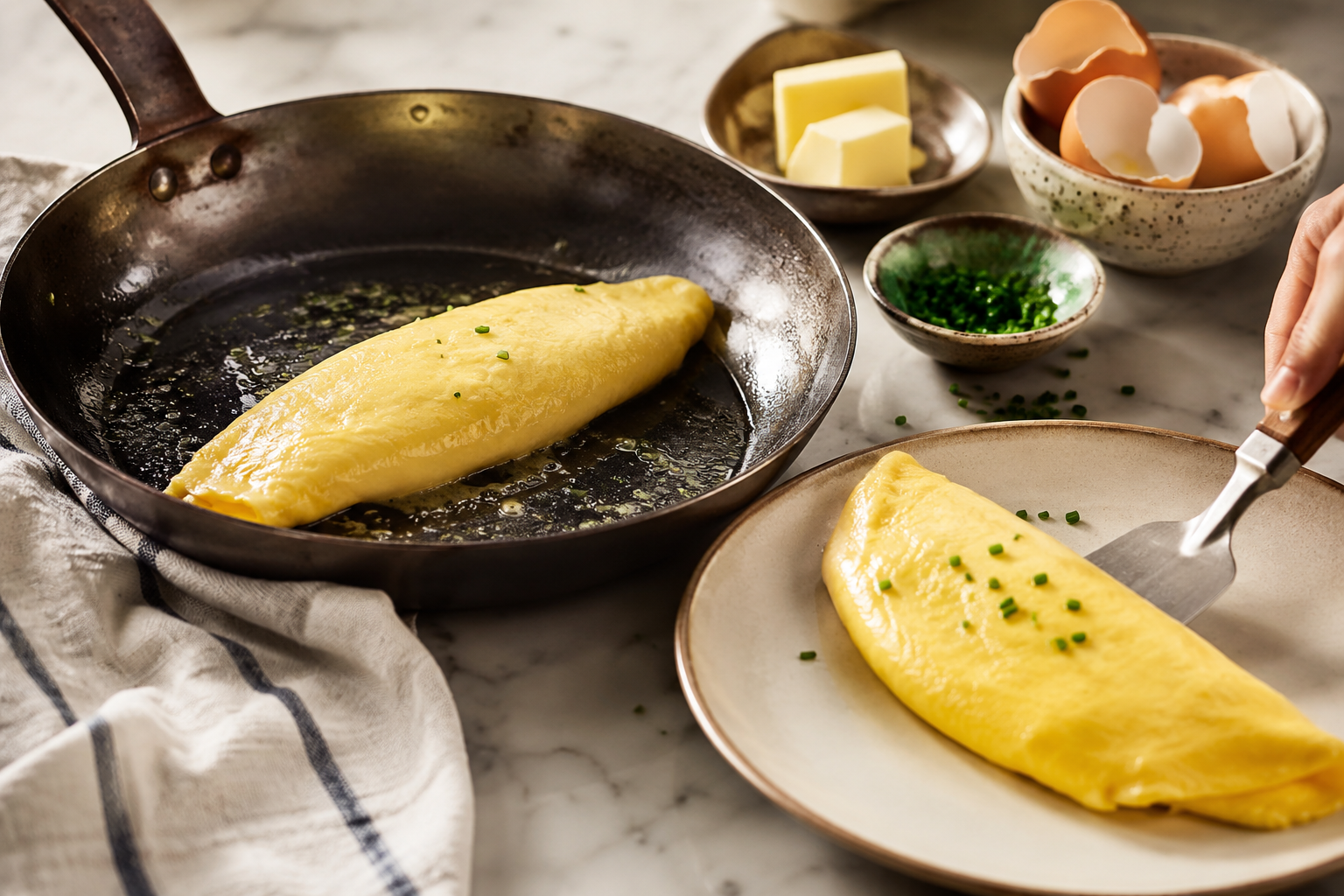

The French omelette is deceptively simple and genuinely difficult to do well. Three eggs. Butter. Salt. The whole thing takes ninety seconds. And yet it exposes technique in a way that more complicated dishes don’t — there’s nowhere to hide when the only variable is the cook.
Carbon steel is the pan for this. Not nonstick, not stainless, not cast iron. Carbon steel develops a natural seasoning over time that, once established, produces an omelette surface that releases cleanly while still allowing the slight texture that makes a French omelette different from a flat egg pancake. Made In’s carbon steel pan is the one that comes up most often in serious cooking discussions for exactly this reason — once properly seasoned it handles eggs with a quality that dedicated nonstick can’t quite match.
A nonstick pan works fine if you don’t have carbon steel. The technique is the same. But if you’re going to make omelettes regularly, a seasoned carbon steel pan is worth building.
Three eggs, properly beaten
Crack three eggs into a bowl. Add a small pinch of salt. Beat with a fork — not a whisk — until the yolks and whites are completely combined with no streaks. Beat longer than you think necessary. The texture should be uniform and slightly frothy.
Some cooks add a teaspoon of water or a splash of cream. Both are fine. The water creates a slightly more tender omelette from the steam it produces. The cream makes it richer. Plain beaten eggs produce a cleaner flavor. All three approaches produce good results.
The pan and the heat
Medium heat. Not high. A French omelette is cooked gently and quickly — the goal is soft, barely set curds that come together into a cohesive omelette without any browning on the exterior.
Add one tablespoon of butter to the carbon steel pan. Wait until the foam subsides — this tells you the water has cooked out of the butter and it’s at the right temperature. The butter should not be browning. If it starts to brown the heat is too high.
The cook
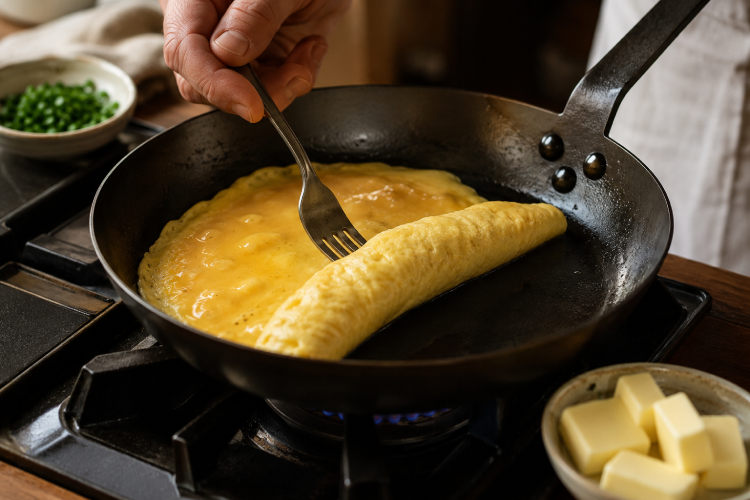
Pour the eggs in all at once. Immediately begin stirring with a silicone spatula using small, rapid circular motions — you’re creating tiny soft curds throughout the egg, not scrambling it into large chunks. Keep the pan moving at the same time if you can.
After about thirty seconds the eggs will look barely set — still wet on the surface, soft curds throughout. Stop stirring. Let it sit for ten seconds to allow the bottom to set just enough to hold together.
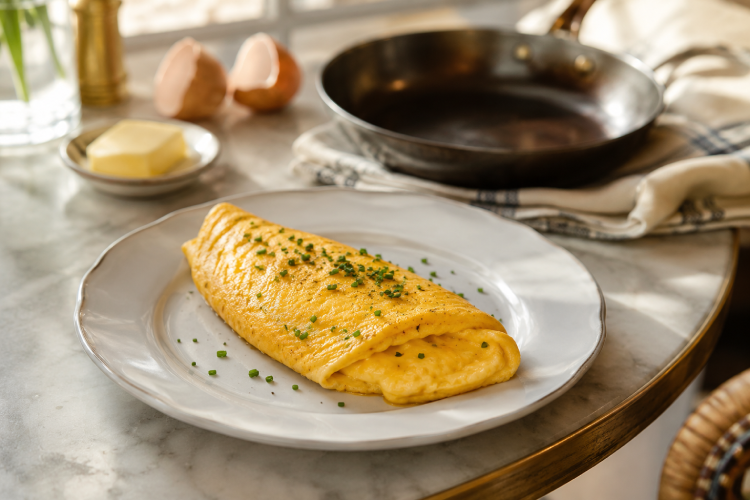
Tilt the pan toward you and use the spatula to fold the omelette in thirds — first the far edge toward the center, then fold in half again as you tip it onto the plate. The whole motion happens in one fluid movement.
The finished omelette should be pale yellow with no browning, slightly soft in the center, and hold its shape loosely. If the exterior is golden it was cooked too hot or too long. If it falls apart it wasn’t set enough before folding.
What goes inside
A French omelette is traditionally unfilled or filled with something simple — fresh herbs mixed into the eggs before cooking, or a small amount of cheese added just before folding. Gruyère or goat cheese both work well. The filling shouldn’t compete with the egg.
If you want a filled omelette with vegetables or other ingredients, that’s a different dish — good, but not what this technique is about.
The practice reality
The first one will probably be imperfect. The second will be better. By the fifth you’ll have the timing and heat level figured out for your specific pan and burner. French omelettes reward repetition — make them for breakfast twice a week for a month and the technique becomes automatic.
Pan: 8 or 10-inch carbon steel pan — Made In, Matfer Bourgeat, or de Buyer Time: 5 minutes Serves: 1