Induction cooking has a steeper learning curve than the appliance manufacturers suggest — not in terms of cooking technique, but in terms of what cookware actually works with it. Buying the wrong set for an induction cooktop is a frustrating and expensive mistake. This guide prevents that.
How induction actually works
Induction cooktops generate heat through electromagnetic induction rather than a flame or a heated element. The cooktop creates a magnetic field that induces electrical currents in compatible cookware — the pan itself generates the heat, not the cooktop surface.
This means only magnetic materials work. A simple test: hold a refrigerator magnet to the bottom of your current pan. If it sticks strongly, the pan is induction compatible. If it doesn’t stick or sticks weakly, it isn’t.
Materials that work on induction: stainless steel with magnetic properties, cast iron, carbon steel. Materials that don’t: pure aluminum, copper, non-magnetic stainless steel, glass, ceramic.
The complication is that not all stainless steel is magnetic. Some stainless steel alloys — particularly 300 series — are austenitic and non-magnetic. This is why some stainless steel pans don’t work on induction. Manufacturers who make induction-compatible stainless either use a different alloy or add a magnetic stainless base plate.
Best induction cookware sets
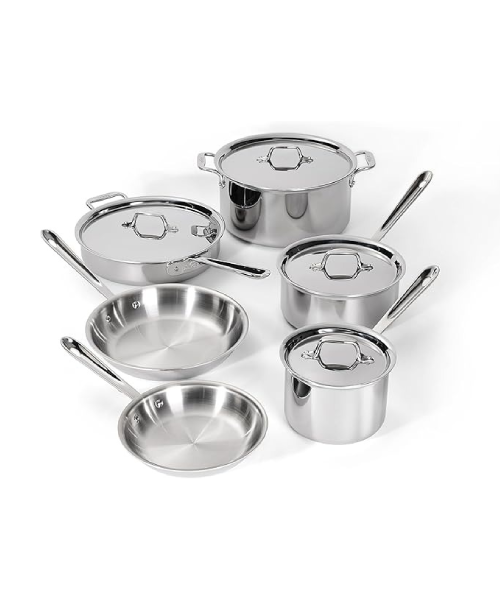
All-Clad’s D3 uses 18/10 stainless on the cooking surface and 18/0 magnetic stainless on the exterior — the 18/0 exterior is what makes it induction compatible. Excellent heat distribution, lifetime warranty, fully clad construction. The gold standard for induction-compatible stainless.
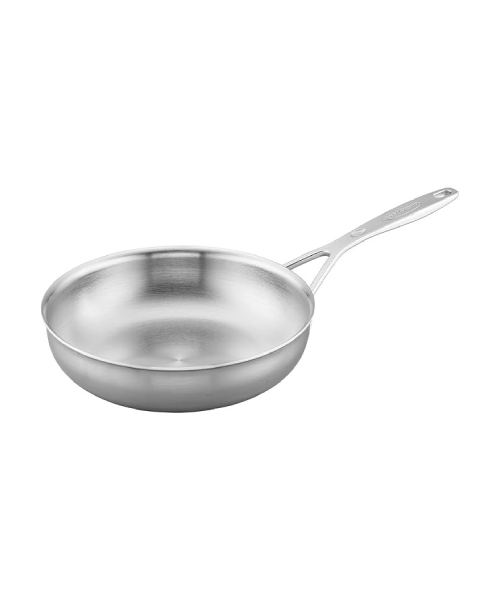
Demeyere specifically engineers their cookware for induction efficiency. The TriplInduc base uses a three-layer magnetic alloy that maximizes energy transfer from the induction field. Among stainless steel options, Demeyere is the most optimized specifically for induction cooking. Worth considering if you cook primarily on induction.
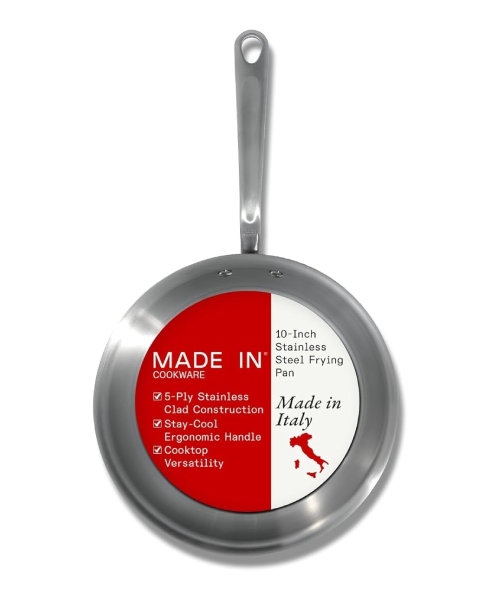
Induction compatible, five-ply construction, significantly less expensive than All-Clad D5. For buyers who want premium construction for induction cooking without paying All-Clad prices, Made In is the straightforward answer.
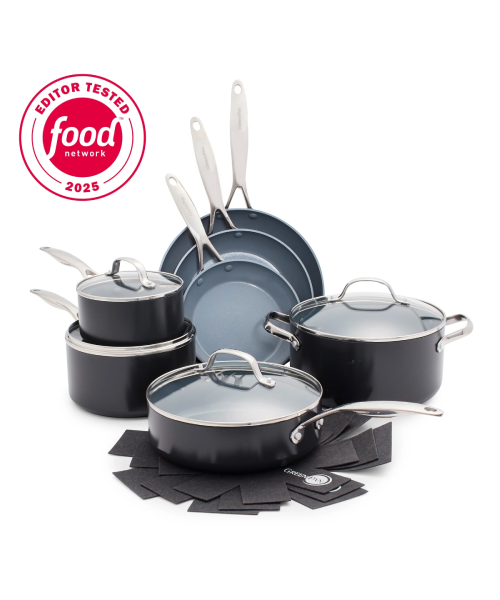
Hard-anodized aluminum with a stainless steel base plate that makes it induction compatible. The ceramic coating performs the same regardless of heat source. For buyers who want nonstick on an induction cooktop, Valencia Pro is the best-constructed option available.
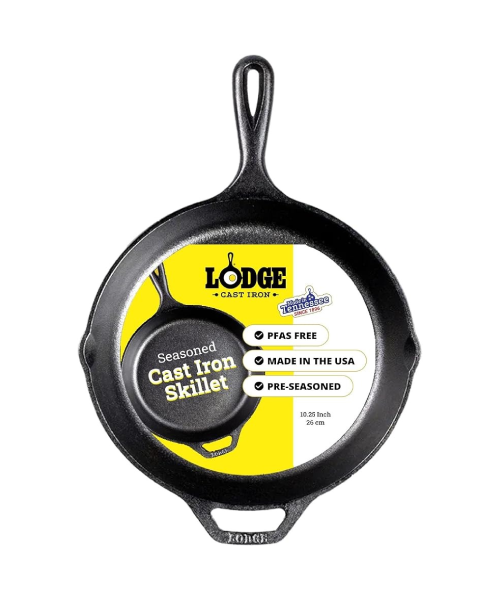
Raw cast iron is inherently magnetic and works perfectly on induction. A Lodge 12-inch skillet costs $30 and performs flawlessly on any induction cooktop. For buyers who want reliable induction-compatible cookware without spending much, Lodge is the obvious answer.
Things to watch for
Some nonstick pans sold as induction compatible use very thin magnetic base plates that don’t perform as well as fully clad or thick-base alternatives. The compatibility is real but the performance is compromised. Look for sets where the induction compatibility comes from the material itself or from a substantial bonded base rather than a thin added plate.
Induction heats quickly. More quickly than most people expect coming from gas or electric. Start with lower settings than you think you need and adjust up — this is particularly important with nonstick pans where excessive heat degrades the coating.