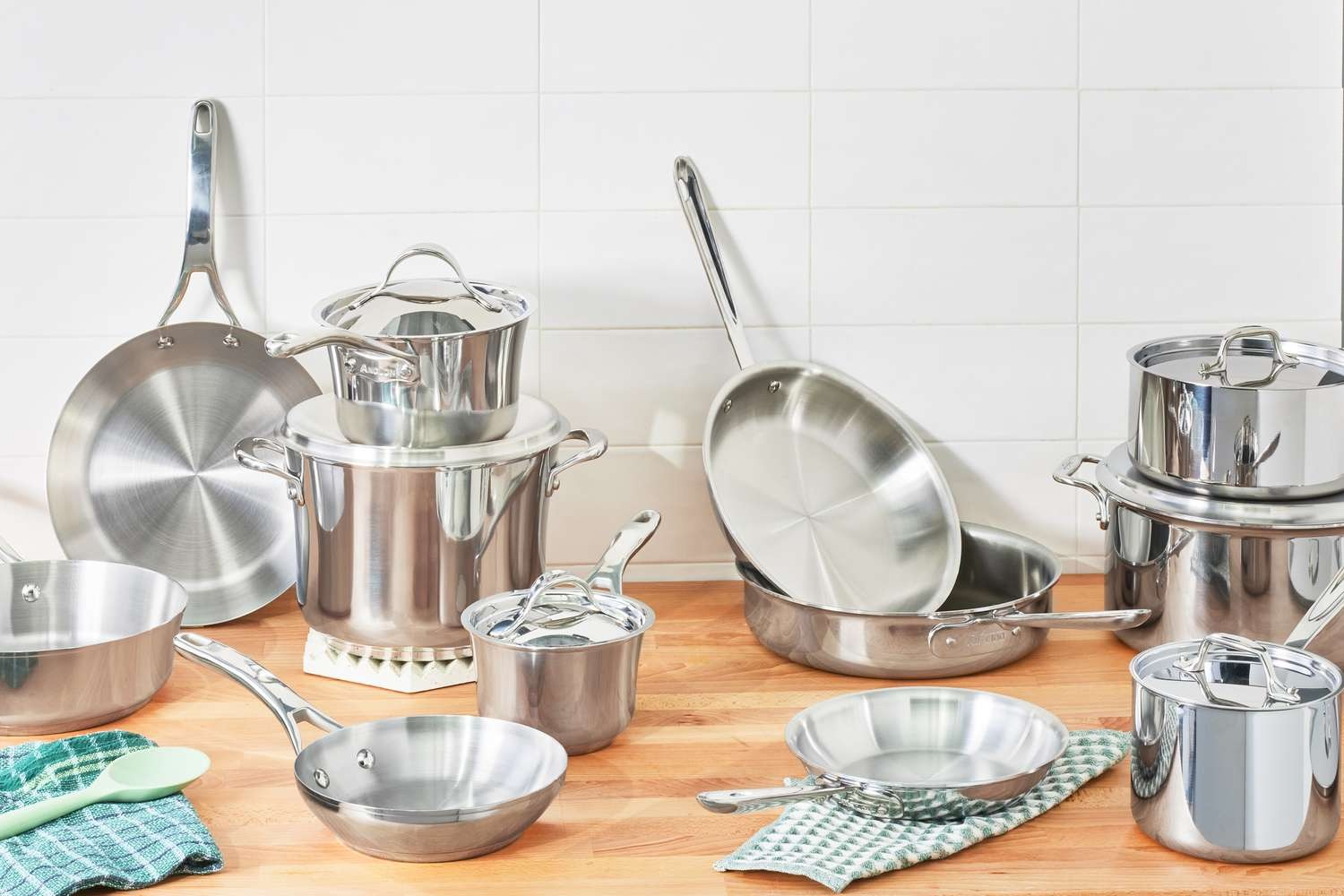

Stainless steel cookware is the category where the marketing language is most disconnected from what actually matters. Tri-ply, five-ply, impact-bonded base, fully clad — these terms get used freely and often imprecisely, and the difference between them is significant enough that buying the wrong thing is genuinely easy to do.
This guide explains what the construction terms mean and which brands actually deliver on them.
What ply count means and why it matters
Stainless steel is a poor heat conductor on its own. It’s non-reactive, durable, and easy to clean, but if you made a pan from pure stainless steel the heat would concentrate directly under the flame and you’d burn everything.
The solution is to bond layers of better heat-conducting metal — usually aluminum — between layers of stainless. This is what “ply” refers to. Three-ply means three layers: stainless cooking surface, aluminum core, stainless exterior. Five-ply means five alternating layers.
More layers generally means better and more even heat distribution, and better retention once the pan is up to temperature. The difference between three-ply and five-ply is real and noticeable, particularly when you’re cooking things that require even heat across the whole surface.
Fully clad versus impact-bonded base is perhaps the more important distinction. Fully clad means the layers run up the entire body of the pan — base and sides. Impact-bonded means the layered construction is only at the base, with single-layer stainless making up the sides. For cooking where liquid or food contacts the sides of the pan — pasta, braises, pan sauces — fully clad distributes heat properly up the walls. Impact-bonded doesn’t.
The best stainless steel cookware
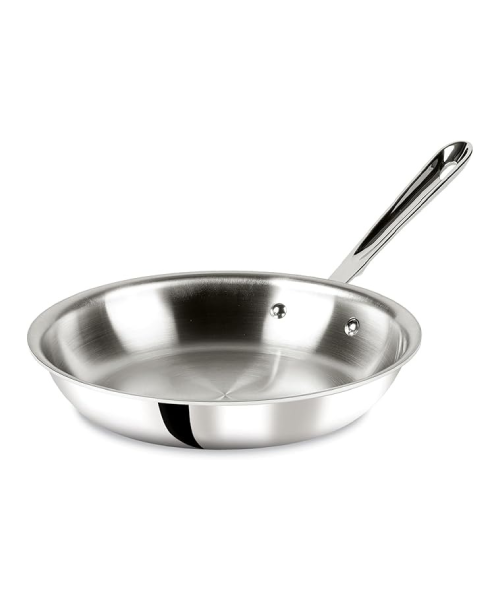
Three-ply, fully clad, made in Pennsylvania since 1971. The foundational stainless steel cookware brand.
All-Clad D3 is the reference point for this category. Three layers of stainless and aluminum, fully clad construction, handles that keep your hand away from the heat source, oven safe to high temperatures. It performs consistently, lasts indefinitely with reasonable care, and comes with a lifetime warranty that they actually honor.
The D3 is more responsive to heat changes than the D5 — turn the heat down and it responds quickly. For delicate sauces and anything requiring fine temperature control, this is an advantage. For buyers who want the All-Clad name without paying Copper Core prices, D3 is the right choice.
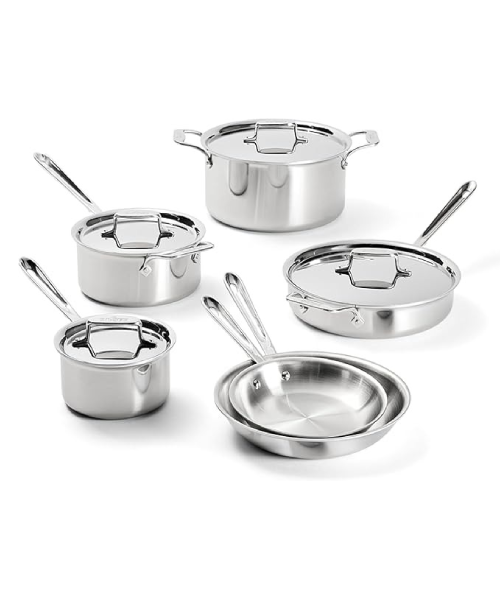
Five-ply, fully clad, slightly higher price than D3.
The extra aluminum layers in the D5 construction slow down heat response slightly and increase even distribution across the surface. Some cooks prefer this for things like risotto or béchamel where steady, controlled heat matters more than responsiveness. Others prefer D3’s faster response. Both are excellent — the choice depends on what you cook most.
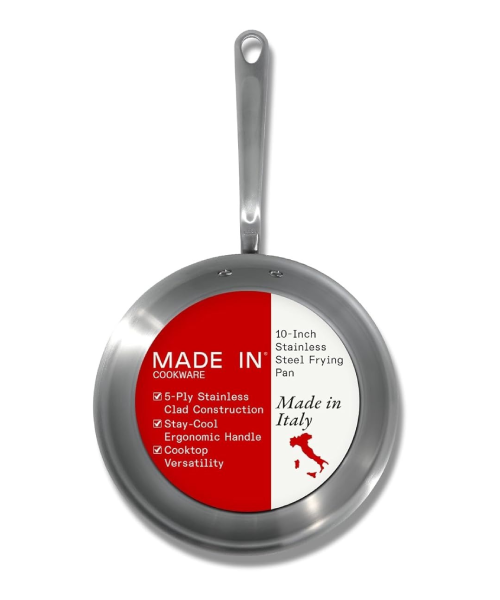
Five-ply, fully clad, manufactured in Italy, sold direct-to-consumer.
Made In delivers five-ply fully clad construction at a price significantly below All-Clad D5 by cutting out the retail chain entirely. The materials are comparable, the manufacturing is in Italy by established makers, and the cooking performance is genuinely similar. For buyers making a rational price-to-construction comparison, Made In is hard to argue against.
The trade-off is no physical retail presence — you can’t handle it before buying — and a shorter track record than All-Clad’s fifty years. Neither of those things affects how the pan cooks.
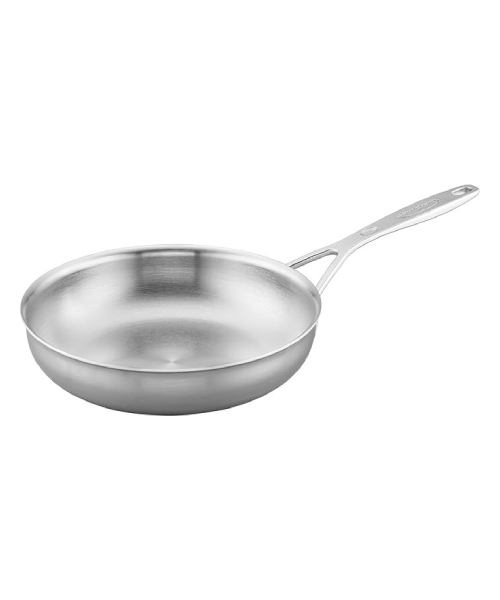
Five-ply, fully clad, made in Belgium. The brand used in serious professional kitchens.
Demeyere is less known in the consumer market than All-Clad but more known in professional kitchens. The Industry 5 line uses a unique welded handle construction — no rivets, which means no gap between handle and pan body where food particles collect. The base uses Demeyere’s TriplInduc technology for better induction performance than most stainless alternatives.
The price is premium. Worth it for buyers who cook professionally at home and want the equipment that restaurant kitchens actually use.
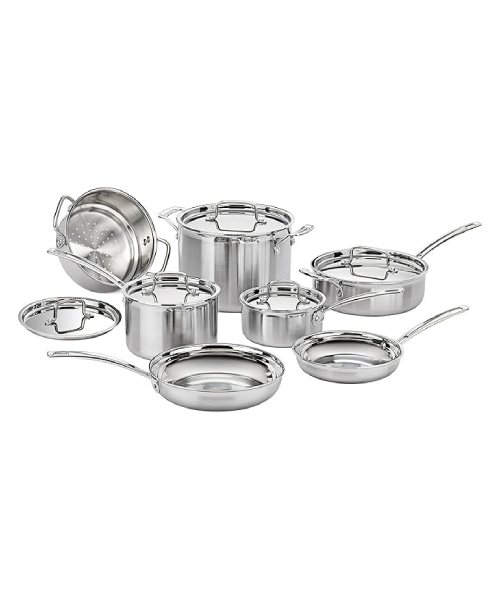
Triple-ply, fully clad, significantly less expensive than premium options.
For buyers who want real triple-ply fully clad construction without premium brand prices, Cuisinart Multiclad Pro is the most consistent recommendation in the category. The construction is genuine, the performance is solid, and it’s frequently available at prices that make it one of the best values in stainless steel cookware.
The technique everyone forgets
Stainless steel requires proper preheating. Add food to a cold or insufficiently heated stainless pan and it will stick. Heat the pan until a drop of water beads up and moves around rather than evaporating on contact. Add your fat, let it heat briefly, then add your food. Protein will initially want to adhere and then release naturally when it’s ready — don’t force it.
This technique is simple once it’s a habit. Until it is, stainless steel frustrates people who expect it to behave like nonstick. It doesn’t and it isn’t supposed to.