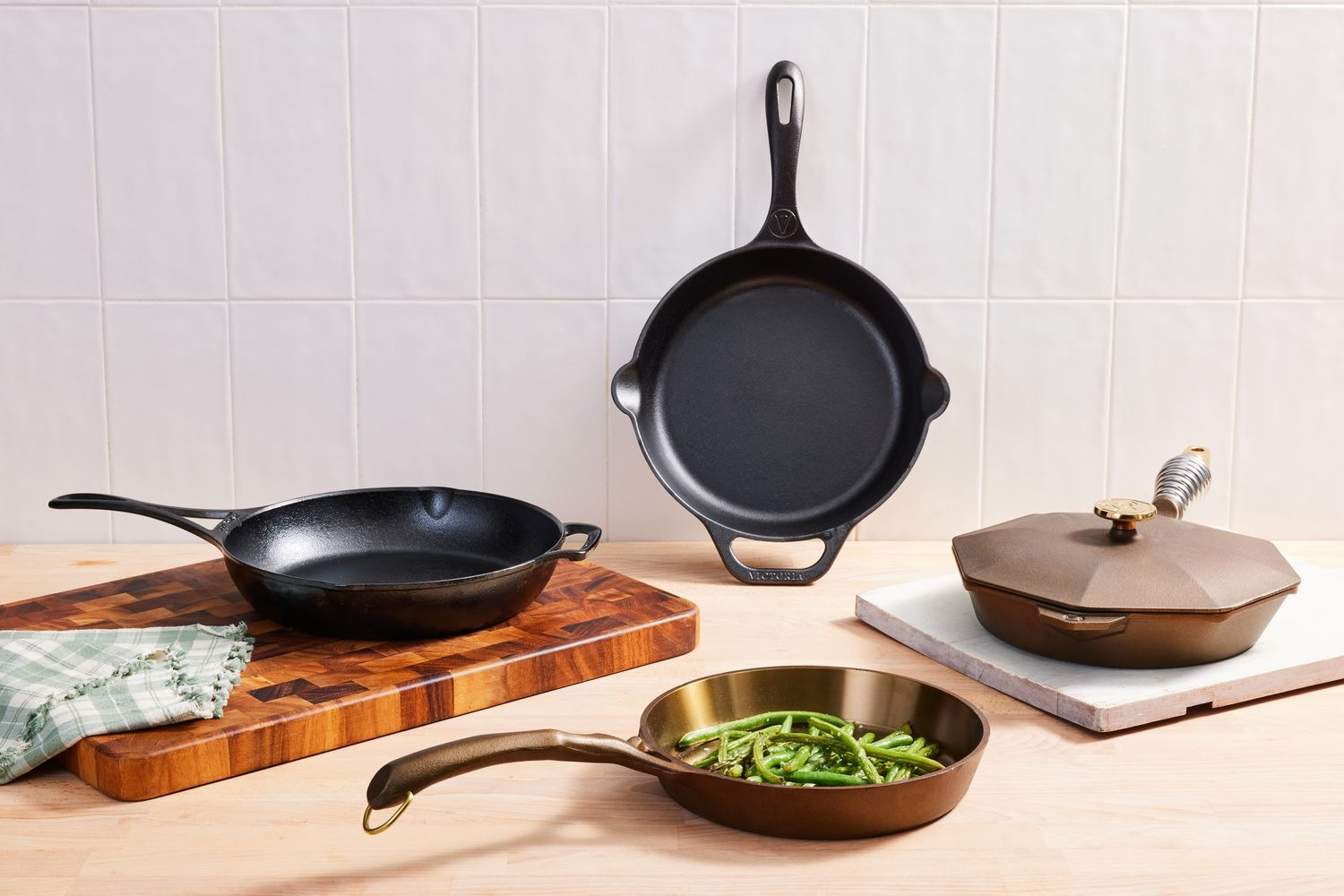
Cast iron is the one cookware category where the cheapest option and the most expensive option are both genuinely worth buying — for completely different reasons. A $30 Lodge skillet is not a lesser version of a $300 Le Creuset. They are different products made from the same base material, and which one belongs in your kitchen depends on how you cook, not how much you want to spend.
That distinction matters. Most buying guides in this category treat price as the main axis. It isn’t.
Raw cast iron and enameled cast iron are not the same product
This is the foundational thing to understand before any brand comparison makes sense.
Raw cast iron is iron all the way through with no coating. It requires seasoning — a layer of polymerized oil that builds up on the surface over time through cooking. When new and under-seasoned, raw cast iron is reactive with acidic food and will rust if left wet. The maintenance requirements are real. But a well-seasoned raw cast iron skillet develops a cooking surface that no other material quite replicates — food browns deeply and evenly, the surface improves the more you use it, and the pan itself can last multiple generations.
Enameled cast iron has a vitreous enamel coating fused to the iron. Non-reactive with acidic food. No seasoning ever required. Won’t rust. Significantly easier to clean. The cast iron base still provides excellent heat retention and distribution, but the surface behaves more like ceramic than raw iron. You lose the developed seasoning of raw cast iron but you gain a maintenance-free cooking experience.
Best raw cast iron
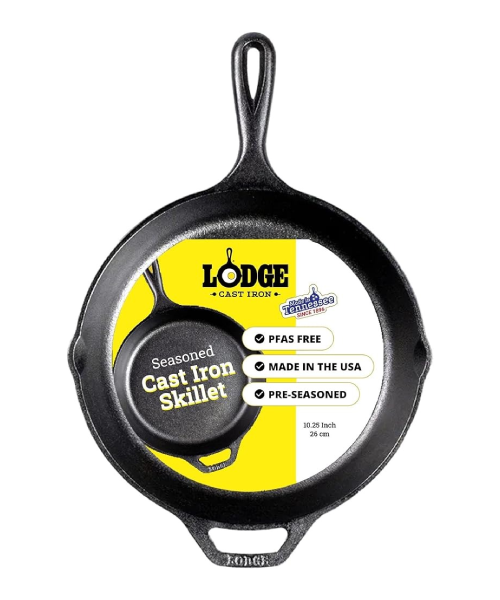
Made in Tennessee since 1896. Pre-seasoned at the factory. Available in sizes from 6.5 inches to 15 inches. Priced at $25 to $45.
The Lodge 12-inch skillet is one of the most honest value propositions in all of cookware. The construction is exactly what cast iron should be — heavy, solid, heats and holds heat properly. Factory pre-seasoning gives you a decent starting surface that builds into something genuinely good over months of regular use.
Building the seasoning takes time and intention. Cooking fatty things — bacon, seared meat, anything with oil — accelerates the process. Within six months of regular use a Lodge skillet cooks noticeably better than when it arrived. After a year it’s a different object. After five years it’s an heirloom.
Maintenance is straightforward once you understand what cast iron actually needs: dry it thoroughly after washing, apply a thin layer of oil occasionally, store it somewhere dry. The rust concern is real but not complicated to avoid.
The texture of Lodge skillets is rougher than some competitors. Victoria and Finex make raw cast iron with smoother finishes that some cooks prefer. Both cost more. The rougher Lodge surface seasons just as well over time.
Best for: Anyone who wants the full raw cast iron experience without spending more than $40.
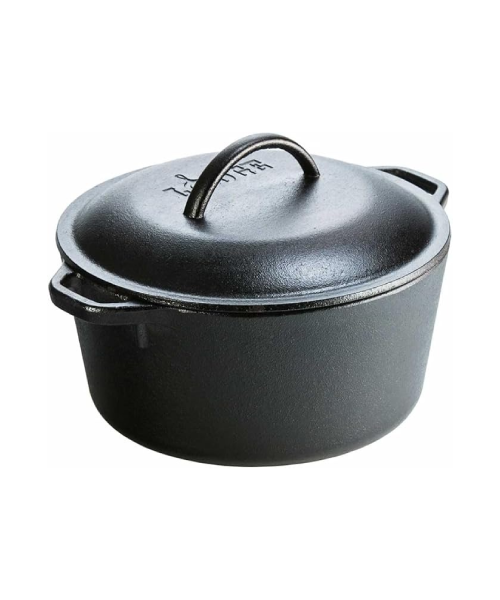
Same construction as the skillet. Available in quart sizes from 2 to 7. Priced $50 to $80.
For cooks who want cast iron Dutch oven performance but can’t justify Le Creuset or Staub prices, Lodge’s raw cast iron Dutch oven is the honest answer. It braises, it makes soups, it bakes bread. The reactive surface means you want to be careful with very long acidic cooks when the seasoning is new — a wine braise in a fresh Lodge Dutch oven will sometimes pick up faint metallic notes. Once properly seasoned this is a non-issue.
The lid fits well. The handles are large enough to grip with oven mitts. It works.
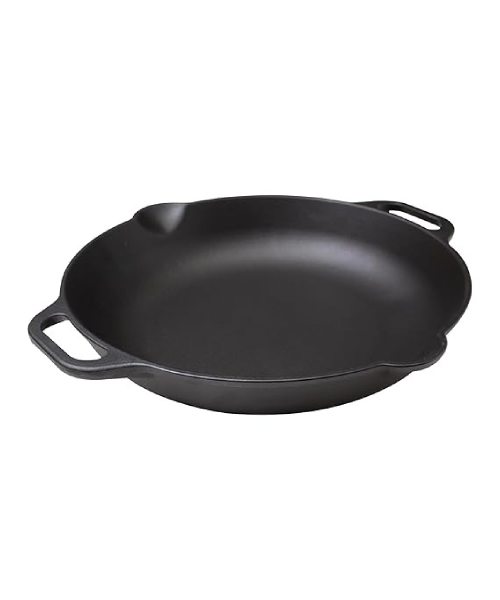
Colombian-made cast iron with a noticeably smoother cooking surface than Lodge. Slightly higher price — around $40 to $60 for a 12-inch.
Victoria pre-seasons their pans with flaxseed oil rather than the soybean oil Lodge uses, which some cooks prefer as a starting surface. The smoother texture makes the initial seasoning process feel more immediate — food releases better on a new Victoria than a new Lodge, before significant seasoning has built up.
Long term the performance difference between a well-seasoned Lodge and a well-seasoned Victoria is minimal. The Victoria is the better starting point if the rough texture of new Lodge pans has frustrated you in the past.
Best enameled cast iron
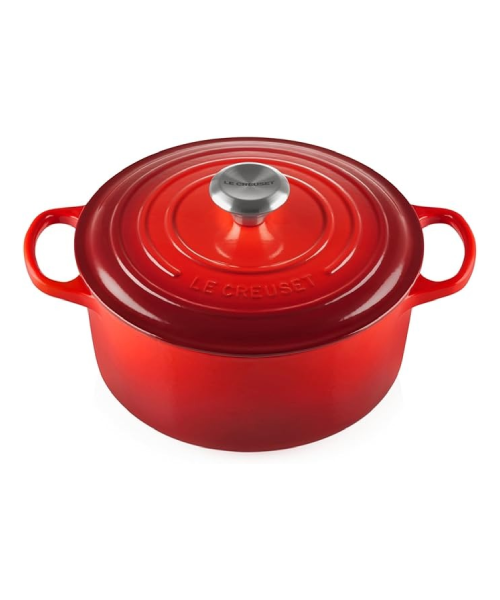
Made in France since 1925. Enameled cast iron, non-reactive interior, available in sizes from 1 to 13 quarts. Lifetime warranty. Priced $350 to $420 for standard sizes.
Le Creuset’s round Dutch oven is the product that built the brand’s American reputation and it deserves the reputation it has. The enameled interior is non-reactive — acidic braises, wine-based dishes, long tomato sauces all cook without any concern. Heat retention is exceptional. The tight-fitting lid traps moisture effectively.
The color range is genuinely remarkable. Dozens of options, seasonal releases, limited editions that develop secondary market values. For buyers who care about their kitchen’s aesthetic, Le Creuset’s palette is unmatched in the cast iron category.
The weight is substantial at larger sizes. A fully loaded 7-quart Dutch oven requires attention when moving. The enamel can chip if dropped on a hard surface — cosmetic rim chips are fine, cooking surface chips are more serious.
Best for: Cooks who braise regularly, make soups and stews often, or bake bread. People who want cast iron without cast iron’s maintenance requirements.
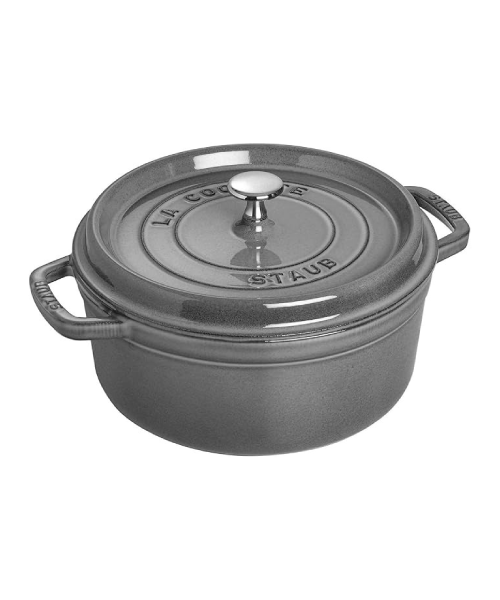
Made in Alsace, France. Enameled cast iron with matte black interior and self-basting lid spikes. Slightly lower price than Le Creuset for comparable sizes.
Staub’s self-basting lid is the functional detail that separates it from Le Creuset for braising specifically. Small spikes on the underside of the lid collect condensation and drip it back evenly onto the food below. In a three-hour braise of short ribs or lamb shanks, the difference in moisture retention on exposed surfaces is real and noticeable.
The black matte interior ages better than Le Creuset’s cream interior — no visible staining, develops a mild patina over time. For cooks who braise frequently and care about long-term maintenance, Staub’s interior is the more practical choice.
Best for: Serious braising. Cooks who cook the kinds of things that benefit from moisture retention over long cooking times.
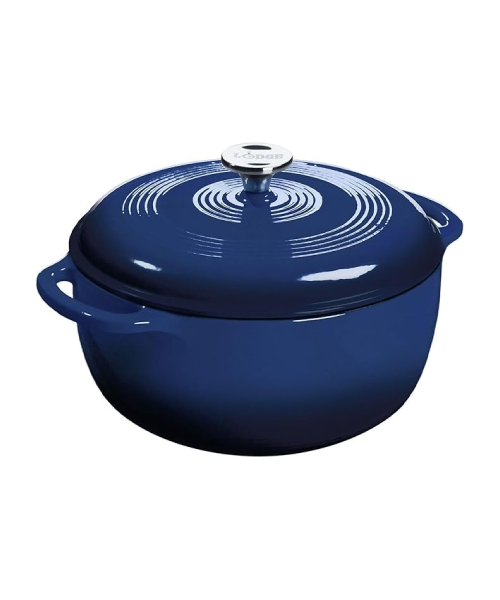
Enameled cast iron at a fraction of Le Creuset’s price. Around $60 to $80 for a 6-quart.
Lodge makes enameled cast iron now and the value is significant. The performance isn’t at Le Creuset or Staub’s level — the enamel finish is less refined and the color options are more limited — but for buyers who want enameled cast iron performance without the French brand price, Lodge delivers it honestly.
The lifetime warranty isn’t as established as Le Creuset’s but it exists. For buyers on a tighter budget who still want non-reactive cast iron cooking, this is the answer.
Matching the right pan to how you cook
Searing meat, cooking bacon, making cornbread — raw cast iron, Lodge skillet.
Long braises, soups, stews, baking bread — enameled Dutch oven, Le Creuset or Staub.
Want both without spending a lot — Lodge skillet for stovetop, Lodge enameled Dutch oven for braising.
Want the best of both without compromise — Lodge skillet for stovetop, Le Creuset or Staub Dutch oven for braising.