Two expensive pans. Very different ideas about what a pan should do. One brand that’s been making the same thing in Pennsylvania for fifty years. One brand that went viral on social media and signed Gordon Ramsay and is very much a product of this particular moment in cookware marketing.
This comparison is less obvious than it looks on the surface.
Different tools for different jobs
The comparison between HexClad and All-Clad comes up because they’re both expensive and both made of stainless steel in some meaningful sense. But they’re actually designed around different cooking priorities.
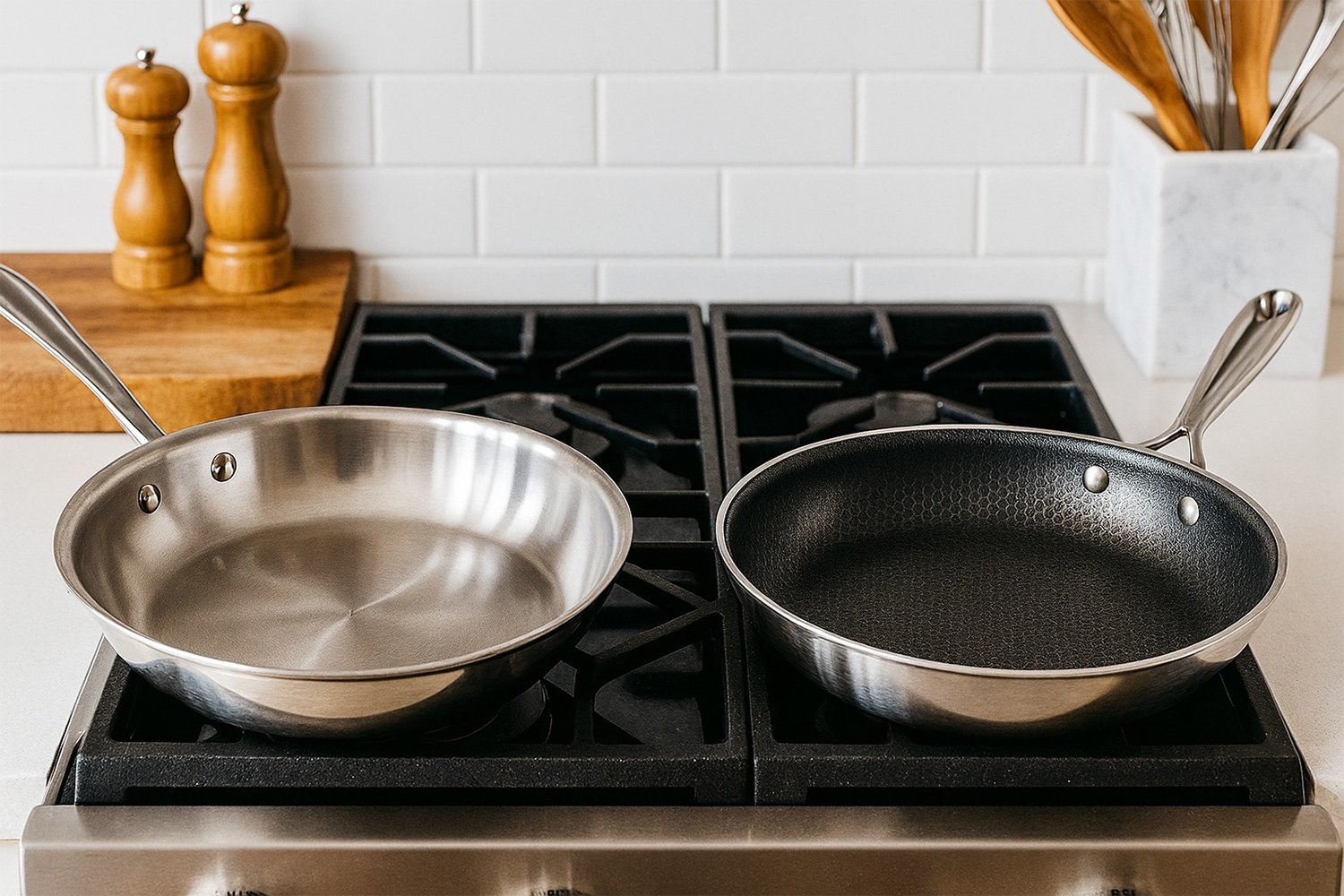
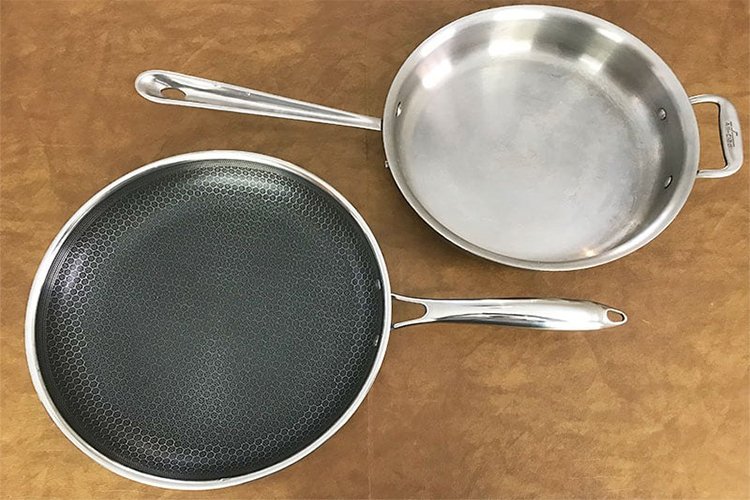
All-Clad D3 is a pure stainless steel pan. No coating, no nonstick surface, no hybrid anything. It’s built for high-heat performance — searing, browning, building fond, making pan sauces. It requires technique to use well. It rewards that technique with cooking results that coated surfaces can’t match.
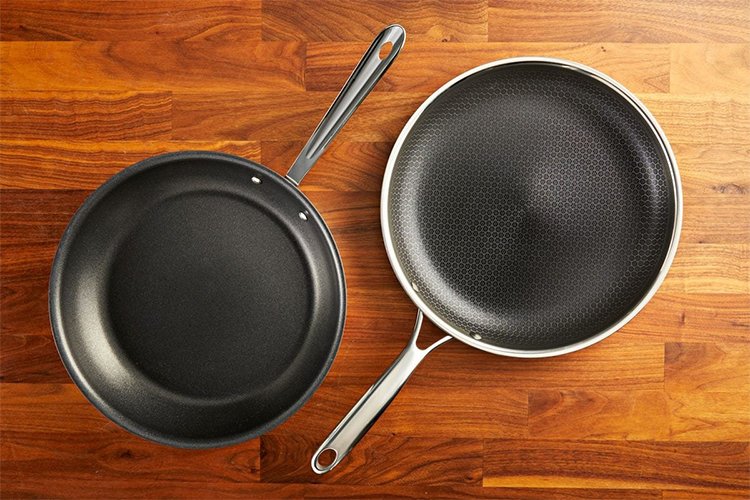
HexClad is a hybrid. The laser-etched hexagonal pattern creates a surface of raised stainless steel peaks and PTFE-coated valleys. The stainless peaks allow for browning and searing. The coated valleys provide nonstick convenience and easier cleanup. The pitch is that you get both in one pan.
Whether that pitch holds up is the actual question this comparison is answering.
What HexClad does well
The searing performance is real. The stainless peaks get genuinely hot and create actual Maillard reaction on meat — a crust forms, browning happens, the kind of sear that flat nonstick surfaces simply cannot produce. This is the hybrid concept’s main genuine advantage.
The cleanup is easier than pure stainless. Food doesn’t bond to the coated valleys the way it bonds to a full stainless surface. You’re not spending ten minutes deglazing stuck protein off the bottom.
The surface is more durable than standard nonstick. The stainless peaks protect the coated valleys from direct abrasion. Metal utensils cause less immediate damage than they would on a flat nonstick surface. The pan holds up to moderately aggressive use better than ceramic or standard PTFE alternatives.
What All-Clad does better
Everything involving high heat performance, pure searing, and longevity.
An All-Clad D3 pan has no coating to degrade. You can use metal utensils without a second thought. You can get the pan screaming hot for a proper steak sear. You can run it through the dishwasher. You can cook acidic food in it without any concern. Twenty years from now the pan will perform identically to how it performs today.
The fond development on All-Clad stainless is also better than HexClad. The coated valleys in HexClad prevent some of the protein and sugar from sticking and browning in the way they would on a pure stainless surface — which means less fond, which means less flavor in the eventual pan sauce. This is a real trade-off that the hybrid design makes.
For the specific task of searing and building a pan sauce, pure stainless outperforms hybrid.
The technique gap
All-Clad requires technique. Food sticks on stainless steel if you don’t preheat properly, if you add food before the pan is hot enough, if you try to move protein before it releases naturally. There’s a learning curve — not a steep one but a real one.
HexClad is more forgiving. The coated valleys mean that even without perfect technique, food releases more easily. For cooks who want high-heat capability without the full commitment to stainless steel technique, HexClad meets them partway.
Whether this forgiveness is worth the trade-offs is a personal calculation.
Price breakdown
HexClad’s 12-inch pan runs around $180 to $200. Sets climb well above $600.
All-Clad D3 12-inch skillet is around $120 to $140. A comparable set is less expensive than HexClad for similar piece count.
All-Clad is less expensive. That’s not a small thing given that it also outperforms HexClad at the specific tasks stainless steel is actually for.
Who should buy which
HexClad makes the most sense for cooks who want one pan that handles both eggs in the morning and a steak sear at night without switching equipment. The hybrid surface is a genuine compromise — not as good as pure nonstick for delicate things, not as good as pure stainless for searing, but competent at both. If the convenience of not switching pans matters enough to you to pay for it, HexClad delivers on that.
All-Clad makes more sense for cooks who are comfortable with technique or willing to learn it, who want a pan that will genuinely last forever, and who are cooking the kinds of things where pure stainless performance matters. It’s less expensive, more durable, and better at the high-heat applications both pans are ostensibly competing for.
The marketing around HexClad suggests it’s a superior product to traditional stainless steel. That’s not really accurate. It’s a different product with a specific trade-off profile. Worth buying for the right cook. Less worth buying for the cook who would be better served by All-Clad and a separate nonstick pan at a lower combined price.