
I stared at a Le Creuset Signature skillet in Williams Sonoma for about ten minutes before putting it back on the shelf. The price felt like a lot for something that was, at its core, a frying pan made of cast iron — a material that costs almost nothing to manufacture.
I walked out. Then I walked back in and bought it two weeks later because I’d read enough to understand what the enamel actually does and couldn’t find a rational argument against owning one.
Three years later, it’s the pan I reach for most. Here’s why.
Quick Highlights
- ✅ Enameled cast iron — all the heat retention of cast iron without seasoning, rust risk, or reactivity with acidic foods
- ✅ Consumer Reports scored it excellent on searing steaks — one of the highest performing pans in their test program
- ✅ No seasoning required — use it immediately, store it without oil, put it through a dishwasher if needed
- ✅ Oven safe for any temperature (with black phenolic knobs the limit is 480°F/250°C)
- ✅ Works on gas, electric, ceramic, and induction stovetops
- ✅ Made in France — each piece hand-inspected at the foundry
- ✅ Available in Le Creuset’s full color range to match other pieces
- ❌ Heavy — the 11.75-inch weighs 6.8 lbs. Not a flip-food-in-the-pan piece
- ❌ Not nonstick — requires oil and proper preheat technique, will stick if used incorrectly
- ❌ Needs to preheat slowly — rushing to high heat can stress the enamel
- ❌ Price: the 10.25-inch starts at $139.95, the 11.75-inch at $199.99
- ❌ Enamel can chip if dropped onto hard surfaces or subjected to thermal shock
Best for: Anyone who wants cast iron cooking without the maintenance demands of raw cast iron. Excellent for cornbread, searing, roasting, skillet desserts, and stovetop-to-oven cooking. The go-to skillet for cooks who want beauty and performance.
Why Trust This Review
Three years of personal use with the 11.75-inch Le Creuset Signature skillet, cross-referenced with Consumer Reports laboratory testing, KitchenAmbition’s independent professional chef review, and long-term owner accounts from Slickdeals cooking communities. No commercial relationship with Le Creuset.
Table of Contents
- About Le Creuset
- Le Creuset Signature Skillet Review: Full Breakdown
- Best Le Creuset Signature Skillet Products
- What Customers Actually Think
- Is Le Creuset Worth It?
- Le Creuset vs Lodge Cast Iron
- Discounts and Where to Buy
- FAQs
- Final Verdict
About Le Creuset
Le Creuset has been making enameled cast iron cookware in Fresnoy-le-Grand, France since 1925. The brand name translates to “the crucible” — a reference to the molten cast iron production process. Every piece is still made in France using the same sand-mold casting process developed at the brand’s founding, with hand-finishing and hand-inspection before shipping.
The signature orange — Flame — has been the brand’s defining color since 1925. Today the range covers over 100 colors across a rotating seasonal selection. The Signature range is the current main line, replacing the Classic range and adding an improved lid knob design and slightly refined ergonomics.
The Signature skillet specifically is cast iron with a black satin enamel interior that provides a cooking surface combining cast iron’s heat retention with enamel’s non-reactivity, non-rust properties, and release from seasoning requirements. It will develop a patina of polymerized oils over time that improves release — similar to seasoned cast iron, but starting from a functional base that never requires the maintenance raw cast iron demands.
Le Creuset Signature Skillet Review: Full Breakdown
What Enameled Cast Iron Does Differently
The reason enameled cast iron exists rather than just regular cast iron is the enamel itself. Raw cast iron requires seasoning — regular applications of oil baked into the surface that build up over time and create the nonstick-ish layer. Raw cast iron reacts with acidic foods like tomatoes and wine, which can affect flavor and leach iron. Raw cast iron rusts if moisture is left on it. Raw cast iron requires specific care that some people maintain happily for decades and others find genuinely burdensome.
Enamel eliminates all of those requirements. The glass-like coating bonds to the cast iron surface and creates a non-reactive, non-rust, no-seasoning-needed cooking surface that retains all of cast iron’s thermal properties. You can deglaze with wine in a Le Creuset skillet without any flavor transfer. You can store it with moisture in the air without rust developing. You can wash it with soap without destroying a seasoning layer.
What you don’t get: the same depth of patina that a well-seasoned bare cast iron develops over decades. Enameled cast iron never becomes as nonstick as a properly seasoned raw cast iron. It requires oil for cooking and proper technique. But it starts usable from day one rather than requiring a seasoning build-up period.
Performance — What Happened in Three Years
The first thing I cooked was cornbread. The Le Creuset cooked it with what a KitchenAmbition reviewer describes perfectly: excellent heat distribution leading to browned edges and a nicely done inside. Cornbread is cast iron’s most natural task and the skillet delivered immediately without any seasoning or break-in period.
Consumer Reports’ laboratory testing specifically scored the Le Creuset Signature as excellent on searing steaks — one of the highest performing results in their cast iron test program. In my own experience this holds: searing a chicken in this pan produces crackling skin and deeply browned crusts. The high heat retention of cast iron means the pan doesn’t lose temperature when cold food hits it the way thinner pans do — which is the critical factor in developing a proper sear.
The front helper handle — a secondary smaller handle on the opposite side of the main handle — is one of the Le Creuset Signature’s most practical design decisions. A fully loaded 11.75-inch skillet with a chicken or a frittata is genuinely heavy. Having two grip points changes the physics of moving it from stovetop to oven meaningfully.
A professional chef reviewer at KitchenAmbition who works with Le Creuset alongside All-Clad D3 as their two home kitchen essentials describes the skillet this way: enameled cast iron qualities with less maintenance. He makes cornbread, peach cobblers, roasts chicken, and describes the pan as performing admirably for everything he asks of it.
The Searing Advantage Over Nonstick
This is worth explaining because it’s the core reason enameled cast iron exists as a category.
Nonstick pans — ceramic or PTFE-based — cannot be used for aggressive searing because the temperatures required damage their coatings. Cast iron doesn’t have this limitation. The Le Creuset skillet can handle the sustained high heat needed to develop Maillard browning without any coating degradation.
The black satin enamel interior develops a natural patina of polymerized cooking fats over time that gradually improves food release. After three years of regular use, my skillet requires noticeably less oil for the same tasks than it did in its first month. That improvement doesn’t happen in enameled with a light interior color (like Staub’s lighter pieces) the way it does in the matte black finish — the black satin Le Creuset uses specifically allows this development.
What Requires Adjustment
Preheating slowly is important. Cast iron holds heat so well that rapid temperature changes — from cold directly to high burner — can stress the enamel over time. Low to medium heat for the first few minutes, then increasing. Once at temperature, cast iron requires less energy to maintain it than a thin aluminum pan does.
The weight is genuinely significant. A 6.8-pound skillet requires some wrist and arm adjustment from lighter pans. It’s manageable for most people. For anyone with grip strength or wrist issues, the smaller 9-inch or 10.25-inch versions reduce the weight at the cost of cooking area.
Best Le Creuset Signature Skillet Products
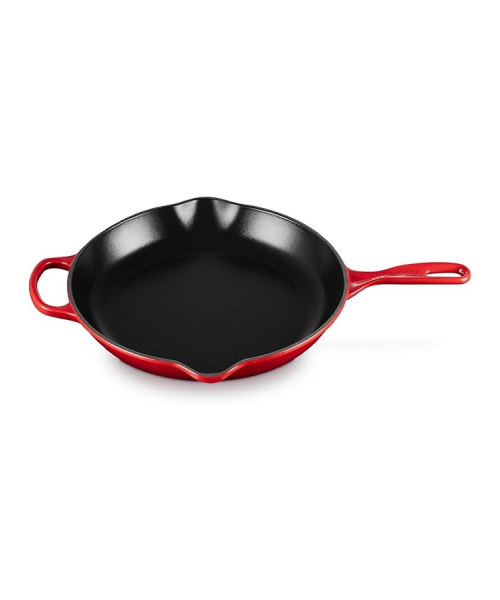
Best for: Home cooks who want the most versatile size for searing proteins, one-pan dinners, cornbread, skillet desserts, and stovetop-to-oven cooking.
Top Features:
- The largest standard Signature skillet — surface area that accommodates four chicken thighs comfortably without crowding, which is critical for proper searing
- Both main handle and front helper handle included — essential for managing the weight with a full load
- Black satin enamel interior that develops cooking patina over time to improve food release naturally
One Honest Drawback: 6.8 lbs is a real commitment. For smaller households cooking smaller portions regularly, the 10.25-inch is more practical.
Verdict: The flagship size and the one that professional reviewers and long-term owners most frequently own and recommend. The helper handle makes the weight manageable.
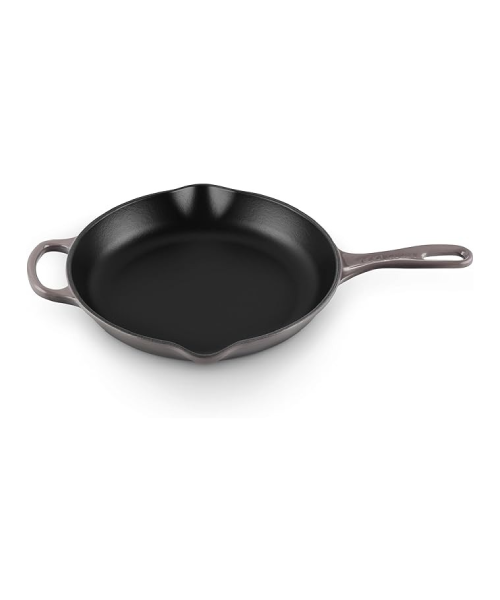
Best for: Smaller households, cooks who want the Le Creuset cast iron experience at a lower weight and price, anyone for whom the 11.75-inch would be unwieldy.
Top Features:
- Same black satin enamel interior and identical construction quality as the larger version — no performance compromise at the smaller size
- The weight reduction from 6.8 lbs to approximately 5 lbs makes a meaningful daily-use difference
- Available in the full Le Creuset color range — starting at $60 less than the large version
One Honest Drawback: Surface area limits you to two to three chicken pieces without crowding. For a family of four or entertaining, the 11.75-inch is the more practical choice.
Verdict: The right size for one or two person households, or as a second skillet for specific smaller-batch tasks alongside a full-size pan.
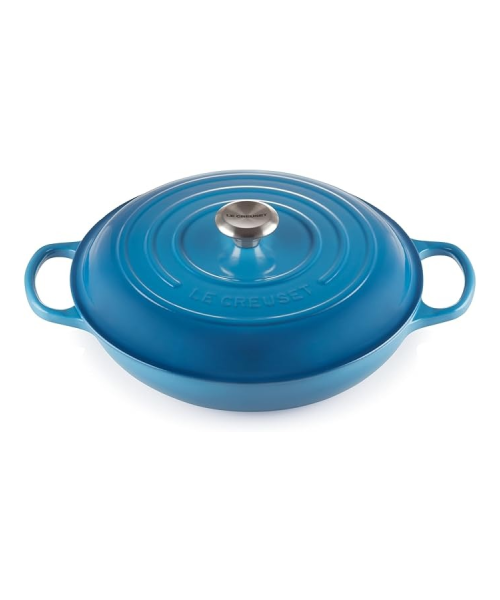
Best for: Shallow braising, one-pan stovetop-to-oven dishes, and cooks who want the self-basting benefits of cast iron in a wider, more accessible form than a Dutch oven.
Top Features:
- The braiser’s wider, shallower profile allows better surface contact during the initial sear before braising liquid is added — more browning, better flavor development
- The tight-fitting domed lid traps steam and returns moisture to the food, similar to a Dutch oven but with the wider footprint making it easier to brown multiple pieces
- Oven-safe for any temperature (subject to the knob limits) — starts on the stovetop, finishes in the oven without transfer
One Honest Drawback: Less versatile than the Dutch oven for recipes requiring significant liquid volume. Soup or stew at scale is better in the cocotte.
Verdict: The natural complement to the skillet for anyone who braises regularly. Where the skillet handles dry-heat and daily cooking, the braiser handles the in-between recipes.
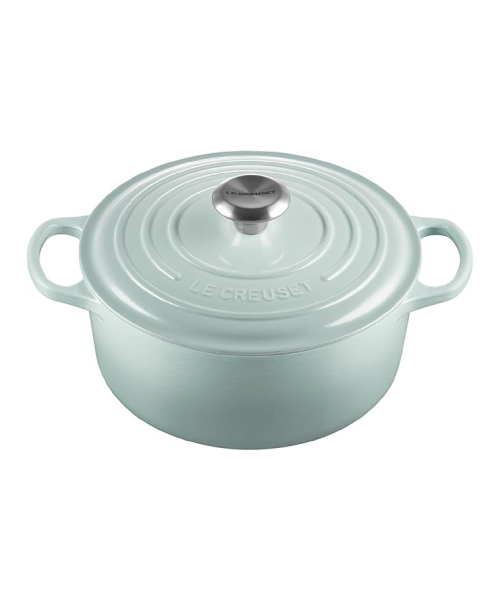
Best for: Braising, soups, stews, no-knead bread, and the full range of long-format cooking where cast iron’s heat retention matters most.
Top Features:
- The same foundry quality as the skillet in the most versatile Dutch oven size — 5.5qt handles most household cooking needs
- Available in Le Creuset’s extensive color range including the original Flame orange and seasonal limited editions
- Compatible with the Le Creuset braiser and skillet lids in some configurations — useful if building a complete set over time
One Honest Drawback: Heavier competition from Staub at this piece category — Staub’s self-basting lid and matte black interior offer genuine performance advantages at a lower price for pure braising performance. Le Creuset wins on aesthetics and color variety; Staub on braising performance specifically.
Verdict: The right choice if color selection and brand coherence with your other Le Creuset pieces matter. For pure braising performance prioritization, compare with Staub before buying.
What Customers Actually Think
The consistent theme across three years of reading Le Creuset Signature skillet reviews from verified buyers: people who buy it don’t regret it and frequently buy additional pieces.
One Slickdeals community member who’s owned Le Creuset for fifteen years and uses pieces daily describes no enamel wear after consistent use. Multiple professional chefs describe using the Signature alongside All-Clad stainless as their personal kitchen essential combination. A KitchenAmbition reviewer with professional kitchen experience specifically notes choosing Le Creuset for home use over stainless-only approaches.
The frustrations that appear are specific: weight-related for people who underestimated it, the slow preheat requirement for people who tried to rush it, and occasional enamel chipping from drops. None of these are product failures — they’re characteristic of the material and use context.
Real accounts paraphrased:
- “Three years of daily use. Still looks perfect. Best cooking purchase I’ve made. The searing on chicken is unlike anything else in my kitchen.”
- “Made cornbread and a peach cobbler in the same week. The heat distribution makes both come out with browned edges and a perfectly done inside.”
- “I was skeptical about the price. Now I have four pieces. You buy it once and it’s done.”
- “It’s heavy — that’s real. But the helper handle makes it manageable. I use it more than any other pan.”
- “Enameled cast iron is genuinely different from raw cast iron. Less maintenance and still all the cooking performance. The Le Creuset quality is consistent.”
Is Le Creuset Worth It?
For cooks who want cast iron cooking without the maintenance of raw cast iron: yes.
The price premium over Lodge cast iron — significant at full retail — buys you three things: the enamel that eliminates seasoning, rust prevention, and food reactivity concerns; the construction quality of French foundry production; and the design that makes the pan beautiful enough to serve in and display on the stovetop.
Whether those three things are worth $120–$200 over a Lodge is genuinely personal. Lodge makes excellent cast iron. The cooking physics are similar. What you’re paying for is the enamel, the construction consistency, and the aesthetics — not better heat retention or better searing (those are roughly equal between the two).
Le Creuset vs Lodge Cast Iron
Le Creuset Signature Skillet | Lodge Cast Iron Skillet | |
Coating | Enameled — no seasoning needed | Raw cast iron — requires seasoning |
Reactive with acidic foods | ✅ No | Yes — affects flavor |
Rust risk | ✅ None | Yes if not maintained |
Seasoning required | ✅ No | Yes — ongoing |
Heat retention | Excellent | Excellent (comparable) |
Searing performance | ✅ Excellent | ✅ Excellent (comparable) |
Weight | Heavy (6.8 lbs 11.75-inch) | Heavy (similar) |
Made in | France | USA (South Pittsburg, Tennessee) |
Price (10-11-inch) | $120–$200 | $25–$45 |
Best for | Ease of use, aesthetics, acidic foods | Budget, raw cast iron cooking, outdoor use |
Discounts and Where to Buy
Le Creuset factory stores — the single best source for discounts on Le Creuset. Factory stores carry discontinued colors, slight seconds, and clearance pieces at 40–60% off. If there’s a factory outlet near you, it changes the value calculation entirely.
Williams Sonoma — authorized retailer with seasonal promotions and the full color range in-stock.
Amazon — competitive pricing, wide selection, useful for specific pieces.
Nordstrom Rack and HomeGoods — occasionally carry Le Creuset pieces at meaningful discounts.
FAQs
Does the Le Creuset skillet need seasoning?
No. The enameled interior never requires seasoning. It does develop a natural cooking patina over time that improves food release, but this happens through normal use and requires no intentional seasoning process.
Can you use metal utensils in a Le Creuset skillet?
The brand recommends against metal utensils to protect the enamel surface. Wooden, silicone, and nylon tools are recommended.
Is Le Creuset dishwasher safe?
Technically yes, but the brand recommends hand washing to preserve the enamel finish and the natural cooking patina that develops over time.
What temperature can Le Creuset go in the oven?
Any oven temperature for the pan itself. Lids with black phenolic knobs (Signature and Classic) are limited to 480°F/250°C. Metal knob versions are unlimited.
How does Le Creuset compare to Staub?
Staub has slightly better heat retention (4mm walls versus Le Creuset’s 3.5mm), a self-basting lid design, and stain-resistant matte black interior. Le Creuset has a larger helper handle opening (easier with oven mitts), more color variety, and slightly more name recognition. Both are excellent — the choice between them is largely ergonomic preference and aesthetic.
Final Verdict
I walked out of Williams Sonoma without the pan the first time. Two weeks later I walked back in and bought it. Three years of near-daily use later, I have three Le Creuset pieces in my kitchen and a confident recommendation to give anyone who asks.
The weight requires adjustment. The price requires deliberation. Everything else about this pan is exactly as good as the reputation it’s spent a century building.
Overall Rating: 8.8 / 10
Category | Score |
Searing Performance | 9.5 / 10 |
Heat Retention | 9.5 / 10 |
Ease of Use (no seasoning) | 9 / 10 |
Construction Quality | 9.5 / 10 |
Weight & Ergonomics | 6.5 / 10 |
Value for Money | 7.5 / 10 |
Aesthetics | 9.5 / 10 |
Overall | 8.8 / 10 |