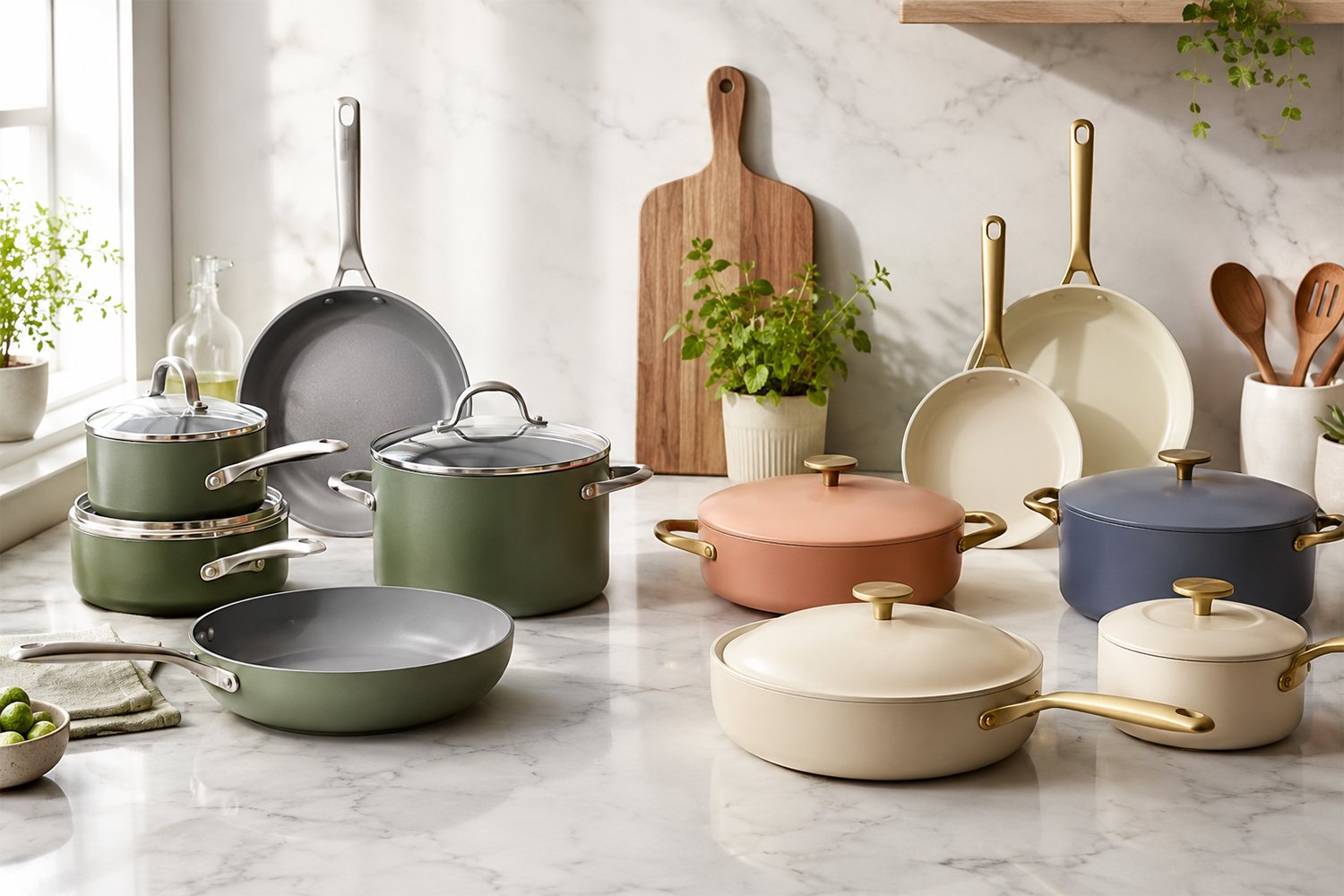
The ceramic nonstick category has gotten crowded. Brands that were doing interesting things five years ago are now competing with a dozen imitators, and the marketing language has become so consistent across the category — PFAS-free, non-toxic, ceramic coating — that it’s genuinely hard to know what separates one brand from another.
GreenPan and Caraway are the two brands that come up most often in this conversation, and they deserve a proper comparison because they’re doing different things even though they’re using similar language to describe their products.
Who each brand is talking to
GreenPan has been making ceramic nonstick cookware since 2007. They invented the mainstream ceramic nonstick category and have spent fifteen years refining the coating technology. Their target customer is someone who wants a reliable, high-performing nonstick pan that doesn’t contain PTFE or PFAS — someone motivated primarily by the cooking performance and health properties rather than by aesthetics.
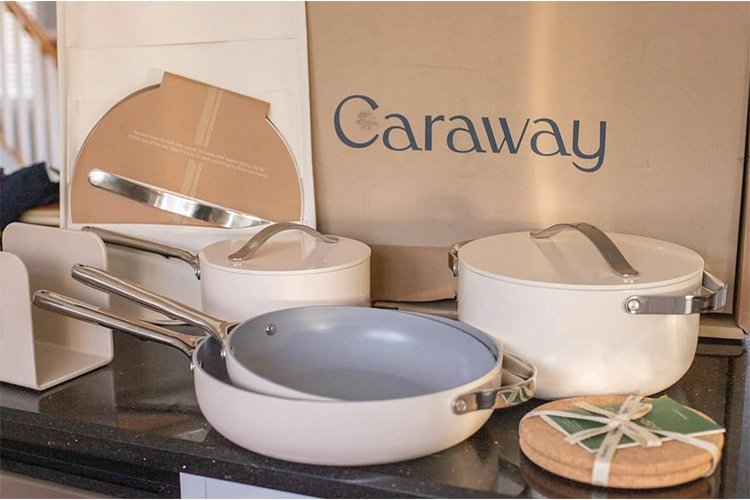
Caraway entered in 2019 with a different center of gravity. The health angle was part of the pitch — same PFAS-free ceramic coating story — but the design and the ownership experience were equally front and center. Caraway specifically targeted people who wanted their cookware to look beautiful. The color palette, the storage solution, the overall lifestyle positioning were deliberate and central to what Caraway was selling.
This difference in focus shapes everything that follows.
The coating technology
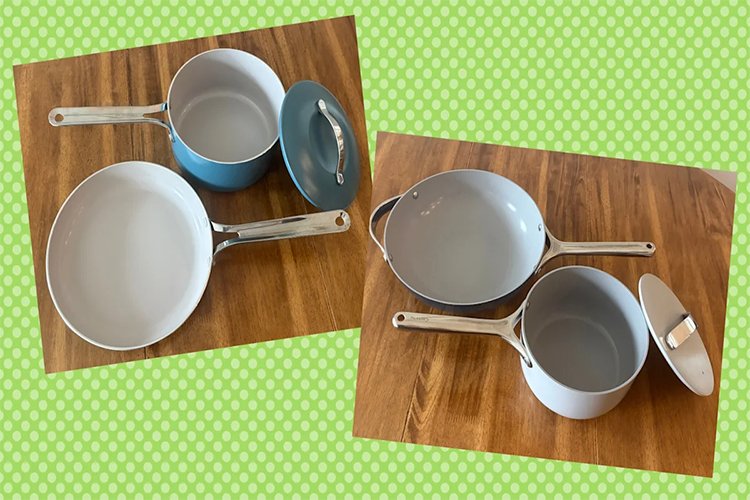
GreenPan uses their proprietary Thermolon coating, which they developed in-house. It’s a ceramic coating derived from silicon dioxide — essentially a form of glass — applied over aluminum and cured at high temperatures. Thermolon has been through multiple generations of refinement since 2007 and the current formulations, particularly in the Valencia Pro and Venice Pro collections, are meaningfully more durable than the early versions.
Caraway uses a ceramic coating that is also PTFE and PFAS-free, but the brand is less specific about the technical details of the formulation. The coating performs well out of the box and holds up reasonably with proper care.
GreenPan has the advantage of fifteen additional years working on this specific technology. The gap in coating sophistication is real, even if it doesn’t always translate into dramatically different performance in everyday home cooking.
Construction
GreenPan’s Valencia Pro uses hard-anodized aluminum. This is a meaningful construction difference. Hard-anodization makes the aluminum significantly harder and more stable, which provides a better foundation for the ceramic coating — the coating bonds more thoroughly, which improves both performance and durability.
Caraway uses standard aluminum. Good quality aluminum, properly formed, but not hard-anodized. The construction is solid for the price point but doesn’t have the same material advantage as hard-anodized alternatives.
In practical terms this means GreenPan’s better collections are likely to maintain their nonstick performance longer than Caraway, all else being equal. The hard-anodized base is more stable under repeated heating and cooling cycles.
Aesthetics and design
Caraway wins this without much contest. The color range is broader, the design is more considered, the storage accessories are genuinely useful, and the overall ownership experience has clearly been thought about from multiple angles. Caraway understood that its customers cared about how their kitchen looked and designed the entire product around that insight.
GreenPan makes cookware that looks professional and functional. It doesn’t look particularly exciting. The colors are more conventional, the storage accessories are absent, and the brand has clearly invested more in coating technology than in lifestyle positioning.
Neither approach is wrong. They’re just different.
Day to day cooking
Both perform well for everyday cooking tasks. Eggs, fish, anything delicate — ceramic nonstick handles it cleanly when the coating is in good condition. Heat distribution is reasonable on both, though GreenPan’s hard-anodized collections distribute heat more evenly.
Both require the same care: low to medium heat, soft utensils, handwashing. These aren’t unusual requirements for ceramic nonstick but they’re worth repeating because ignoring them shortens the coating’s life on any brand.
Both will eventually fade. This is ceramic nonstick as a category, not a brand-specific flaw. GreenPan’s better collections will likely hold up longer. Caraway will look better while it lasts.
Price comparison
Caraway’s four-piece set runs around $395. Individual pieces from roughly $95 to $145.
GreenPan’s Valencia Pro 10-inch skillet is around $60 to $70. A comparable set is less expensive than Caraway. The Venice Pro line is more expensive and compares more closely to Caraway on price.
GreenPan offers meaningfully better value on a pure cooking-performance-per-dollar basis. Caraway charges a premium for design that is genuine and well-executed — you’re not being deceived when you pay it — but you are paying for it.
The actual choice
Buy Caraway if design genuinely matters to you, if you want your cookware to look as good as it performs, and if you’re buying a complete set and value the storage solution that comes with it.
Buy GreenPan — specifically Valencia Pro or Venice Pro — if you want the better coating technology, the hard-anodized construction, and the longer track record in ceramic nonstick at a lower price point. The aesthetic won’t excite you. The performance will hold up.