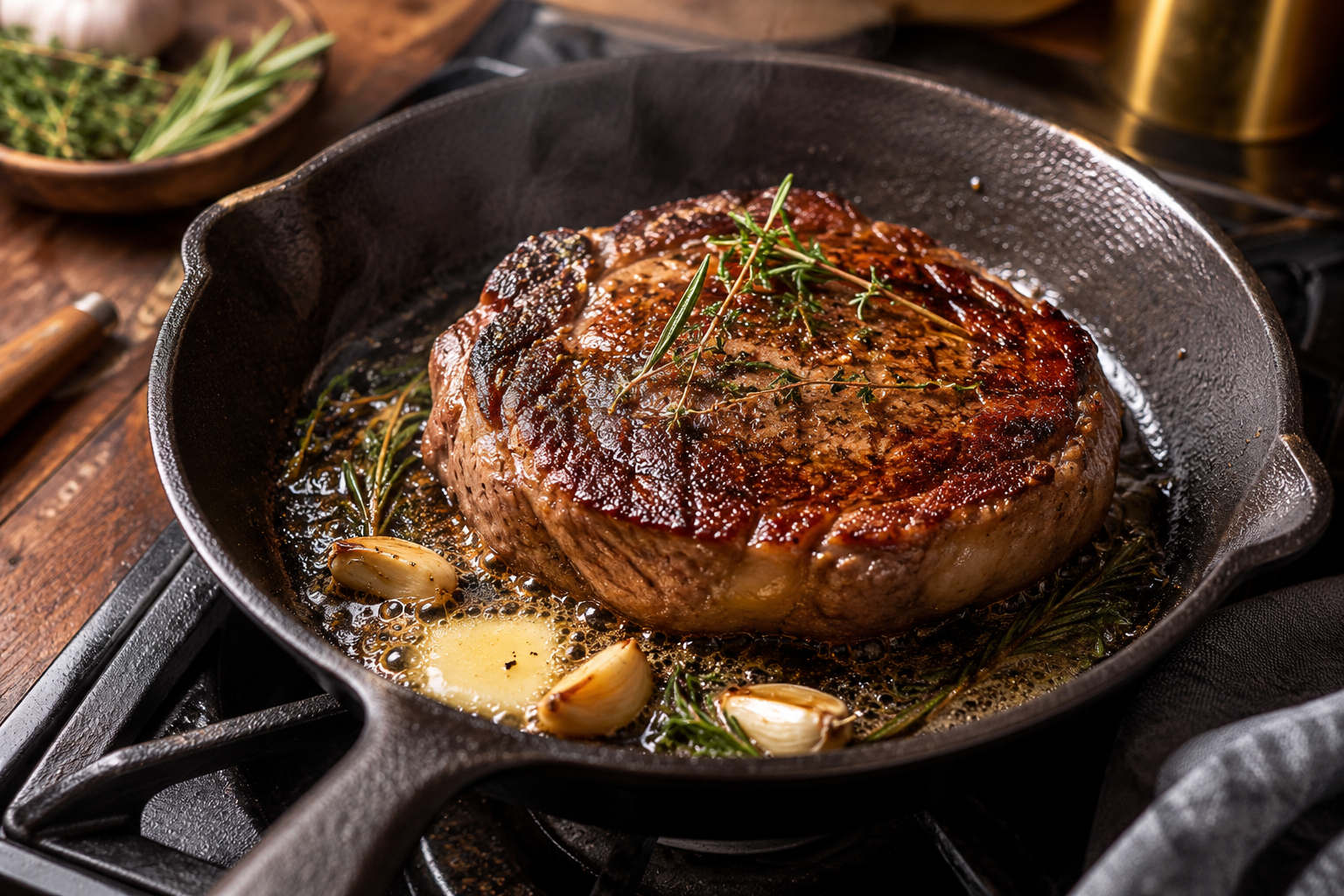

Most people who say they can’t cook a good steak at home are actually just using the wrong pan. A thin nonstick skillet or a stainless pan that hasn’t been preheated properly will never give you what you’re looking for — the deep brown crust, the smoky edges, the kind of exterior that makes the interior taste better just by contrast. Cast iron does this. Nothing else in a home kitchen comes particularly close.
This isn’t a complicated recipe. It’s a method. Once you understand what’s actually happening at each step, you can apply it to any steak and get consistent results.
The pan
A 12-inch cast iron skillet — Lodge, Le Creuset, Victoria, whatever you have — is what you need. The size matters. A 10-inch skillet with a large ribeye crowding the edges will steam rather than sear because there’s nowhere for the moisture to go. Give the steak space.
If you have a carbon steel pan, that works too. Carbon steel heats faster than cast iron and is more responsive to temperature changes. The sear quality is similar. Most home cooks have cast iron rather than carbon steel so that’s what this method is built around, but the technique translates directly.
The steak
Ribeye or strip are the most forgiving cuts for this method. The fat content in ribeye in particular protects the meat from drying out and adds to the browning on the exterior. A one-inch to one-and-a-quarter-inch thickness is ideal — thick enough to develop a proper crust before the interior overcooks, thin enough to cook through in a reasonable time without finishing in the oven.
Take the steak out of the refrigerator at least thirty minutes before cooking. Cold meat hitting a hot pan drops the pan temperature significantly, extends cooking time, and produces uneven results. Room temperature steak goes into a hot pan and stays in a hot pan.
Pat the steak completely dry with paper towels. Moisture on the surface of the meat turns to steam when it hits the pan, which prevents browning. This step makes a noticeable difference in crust quality and takes about ten seconds.
Season generously with salt — more than feels natural — on both sides and the edges. The salt draws a small amount of moisture to the surface initially and then gets reabsorbed, seasoning the meat throughout rather than just on the outside.
The preheat
This is where most home cooks go wrong. Cast iron needs to be properly preheated and most people don’t wait long enough.
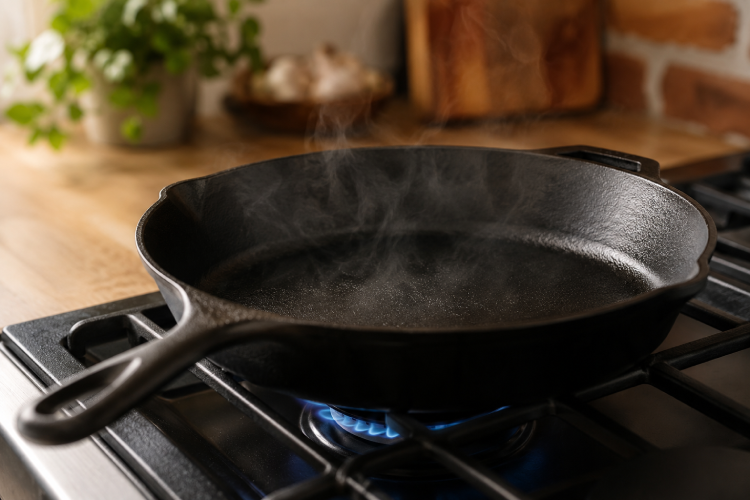
Put the dry skillet on your largest burner over high heat. Leave it there for four to five minutes minimum. The pan should be very hot — a drop of water should evaporate almost instantly on contact. You can test it by holding your hand a few inches above the surface; you should feel significant radiant heat.
Add a high smoke-point oil — avocado oil, refined coconut oil, or even regular vegetable oil. Not olive oil. Swirl it to coat the surface. It should shimmer immediately and begin to smoke lightly within seconds.
The cook
Place the steak in the pan away from you to avoid oil splatter. Do not move it. Do not press it down with a spatula. Leave it completely alone for three to four minutes depending on thickness.
The steak will initially want to stick. This is normal — it’s the proteins bonding to the surface. When a proper crust has formed the steak will release naturally. If you try to move it before the crust forms and it resists, it isn’t ready. Leave it.
Flip once. The second side takes slightly less time than the first — two and a half to three minutes for medium rare on a one-inch steak.
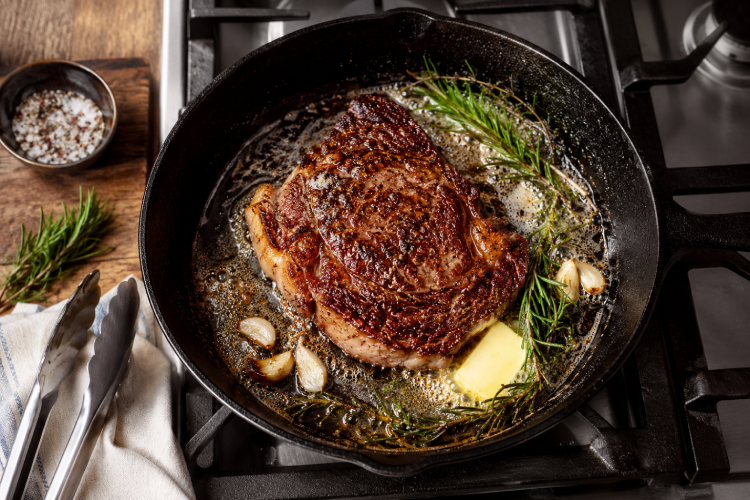
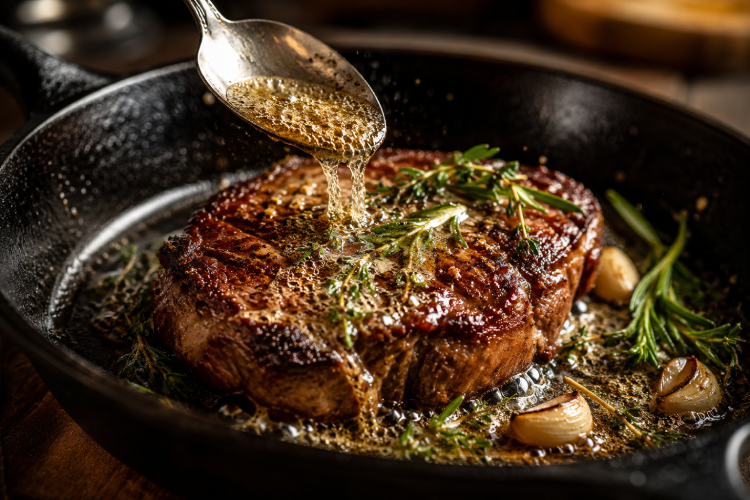
For the last minute of cooking, add two tablespoons of butter, two smashed garlic cloves, and a few sprigs of fresh thyme to the pan. Tilt the pan slightly and use a spoon to continuously baste the steak with the foaming butter. This adds flavor and helps the crust develop further on both sides.
Resting
Remove the steak from the pan and rest it on a wire rack over a plate — not a cutting board — for five to eight minutes. Resting on a wire rack prevents the bottom from getting soggy from its own steam. Five minutes minimum, eight is better for a thicker steak.
Do not skip this step. Cutting into a steak immediately after cooking squeezes the juices out onto the cutting board. Resting allows the proteins to relax and the moisture to redistribute throughout the meat.
The pan sauce — optional but worth it
While the steak rests, the pan has beautiful browned bits — fond — stuck to the surface. Don’t waste it.
Pour off most of the butter and fat, leaving about a tablespoon. Add one finely minced shallot and cook over medium heat for a minute. Add a splash of red wine or beef stock — about a quarter cup — and scrape up all the fond with a wooden spoon. Let it reduce by half. Add a tablespoon of cold butter and swirl it in off the heat until the sauce is glossy. Season with salt.
This takes four minutes and turns a good steak into a great meal.
The setup
What you need: 12-inch cast iron skillet, high smoke-point oil, butter, garlic, fresh thyme, salt, pepper.
Time: 10 minutes active, 5-8 minutes resting.
Serves: 2 with one large ribeye, or make two steaks simultaneously in a larger pan.